Dive into Cosmic Horror: A Guide to Lovecraft-Themed Games & Gear

Dive into Cosmic Horror: A Guide to Lovecraft-Themed Games & Gear

Here are the best games and immersive accessories that bring the Cthulhu Mythos to life.

Dive into Cosmic Horror: A Guide to Lovecraft-Themed Games & Gear Hero Image

Whether you’re drawn to creeping dread, unspeakable mysteries, or battling ancient gods with tabletop minis, Lovecraft-inspired games deliver some of the richest themes in tabletop gaming. From sprawling cooperative epics to quirky card games with tentacles, there’s something for every horror fan.

Classic Lovecraft Board Games
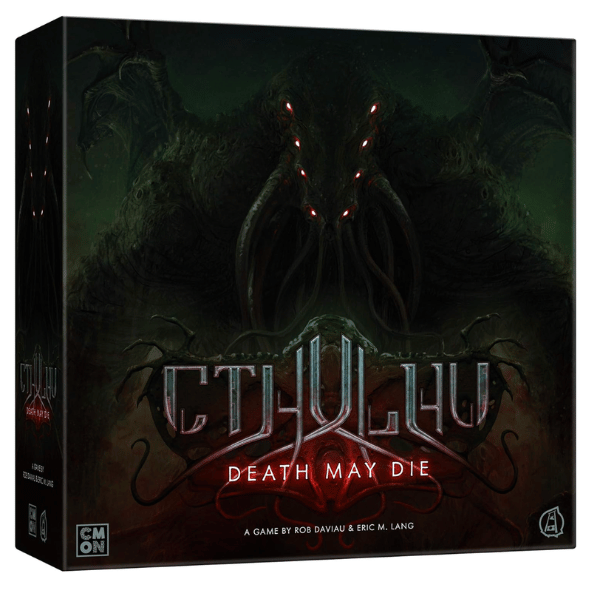

Cthulhu Death May Die

Cthulhu: Death May Die

A modern favorite among Lovecraft gamers. You and your friends play investigators up against a summoned Great Old One — and things get wild fast. With dynamic scenarios, tons of detailed miniatures, and cinematic combat, this game feels like fighting cosmic horror in real time.

Vibe: Action-packed, cooperative horror
Best for: Groups who love combat and minis
Grab the Game on Amazon


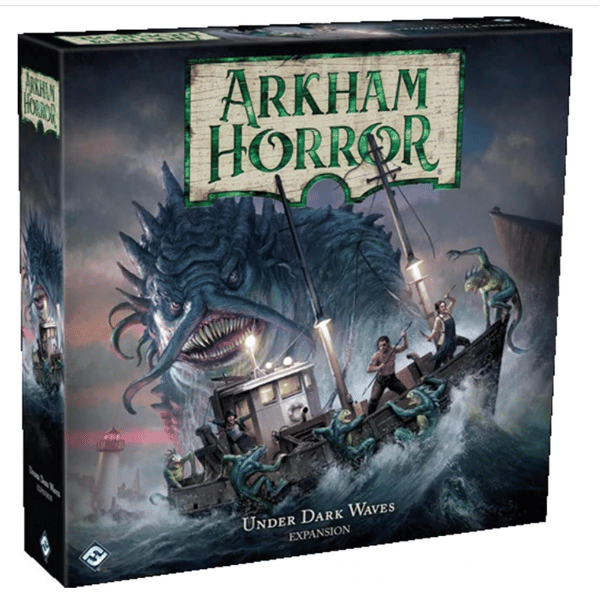
Arkham Horror

Arkham Horror

There are so many editions and expansions for this one. It’s a cornerstone of Lovecraftian board gaming. In Arkham Horror players explore a haunted town, close gates, and battle eldritch forces before the world slips into chaos. 

Vibe: Deep, narrative-heavy co-op
Best for: Long game sessions and role-play lovers
Grab the Game on Amazon


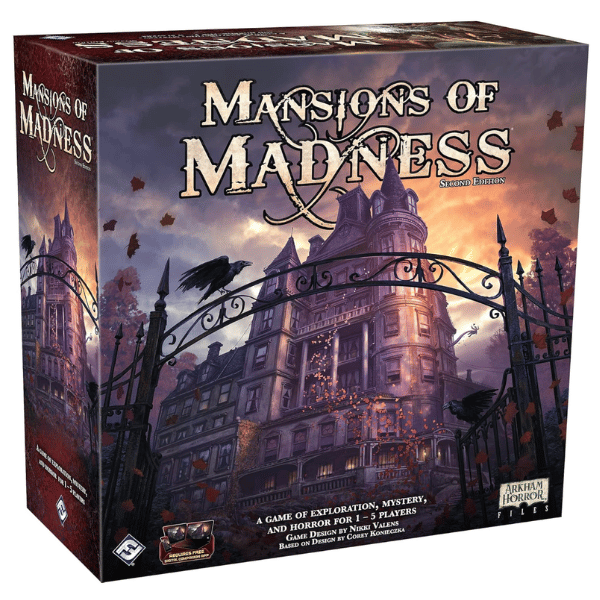
Mansions of Madness

Mansions of Madness

This semi-cooperative scenario game blends Lovecraft storytelling with modular board tiles and app-driven encounters. Players explore eerie locations, encounter monsters, and try to survive their own worst fears.

Vibe: Immersive, story-first horror
Best for: Players who love narrative campaigns
Grab the Game on Amazon


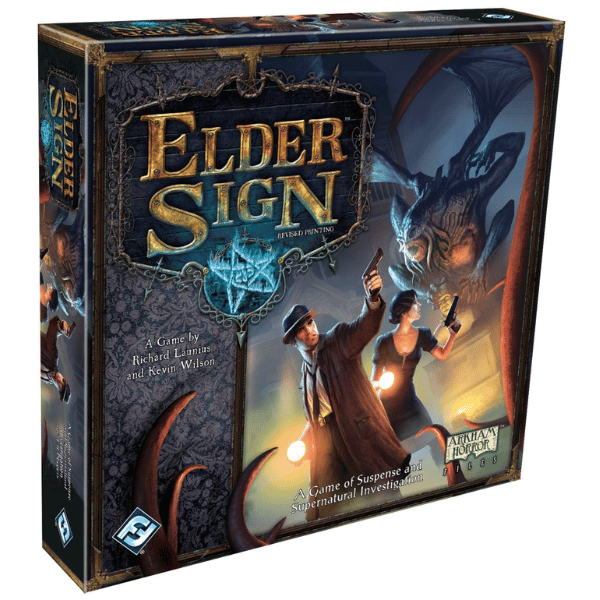
Elder Sign

Elder Sign

If Arkham Horror feels too big, Elder Sign delivers the same cosmic danger in a shorter, dice-driven format. It’s cooperative and tense, but wraps up faster — making it great for game nights where you want atmosphere without marathon playtimes.

Vibe: Quick cooperative horror
Best for: Game nights with limited time

Grab the Game on Amazon

Unique & Fun Cthulhu-Themed Games


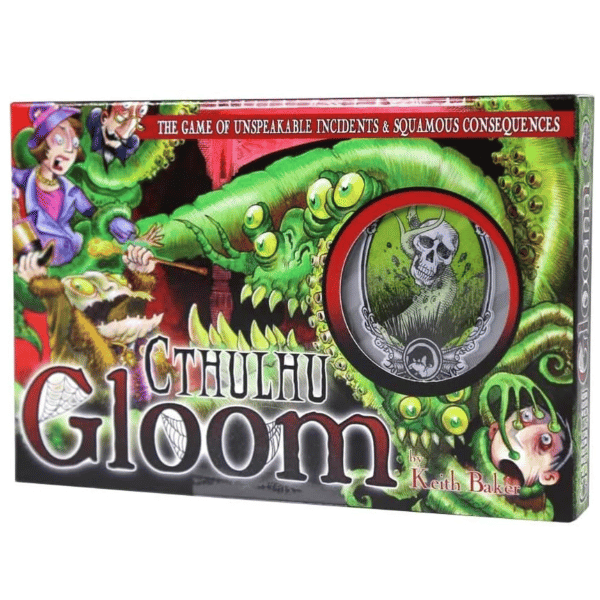
Cthulhu Gloom

Cthulhu Gloom

A twisted take on the classic Gloom card game, where you’re trying to make your characters’ lives as miserable as possible before they meet their grisly ends. Dark humor meets Lovecraftian mayhem.

Vibe: Grimly funny
Best for: Lighter horror with laughter
Grab the Game on Amazon


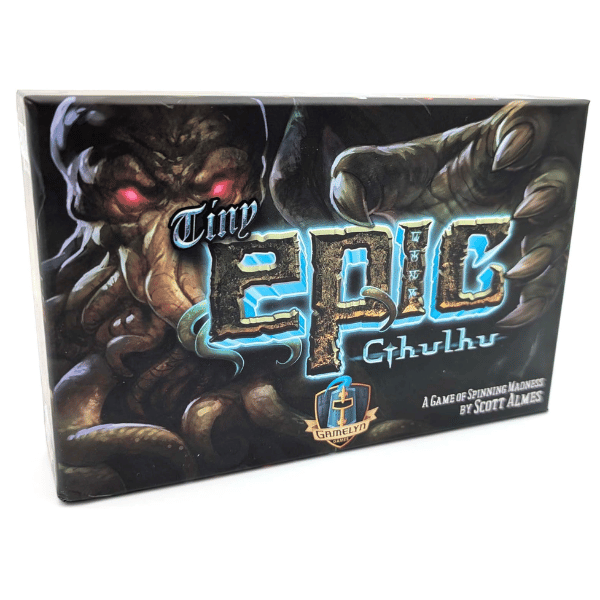
Tiny Epic Cthulhu Cooperative Board Game

Tiny Epic Cthulhu Cooperative Board Game

From the Tiny Epic series, this cooperative adventure has you sealing portals and decoding eldritch texts with a compact setup. Deep theme, clever mechanics, and space-friendly box.

Vibe: Thematic yet portable
Best for: Small groups & shorter playtimes
Grab the Game on Amazon


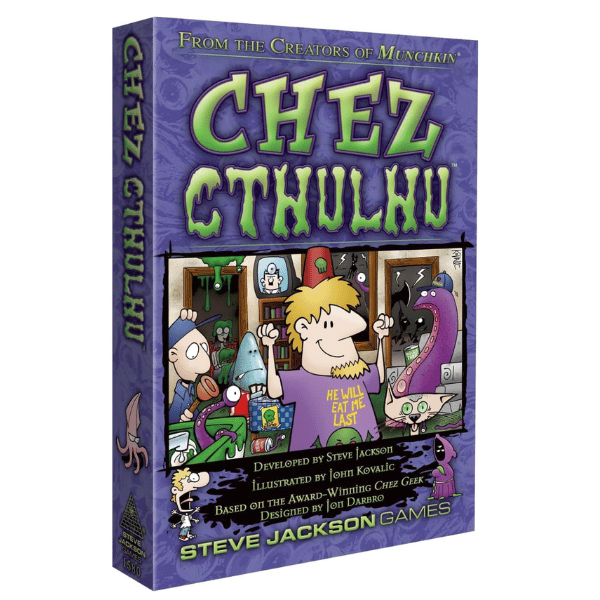
Chez Cthulhu

Chez Cthulhu

A quirky, lighter Cthulhu-themed card game that blends humor and mythic horror. It’s perfect between heavier sessions or as a fun intro to the genre.

Vibe: Casual & silly
Best for: Parties and lighter play
Grab the Game on Amazon


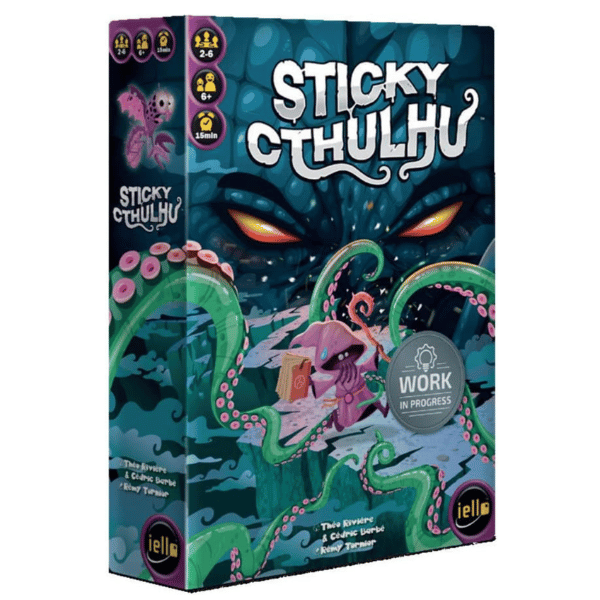
Sticky Cthulhu Board Game

Sticky Cthulhu Board Game

A budget-friendly, whimsical spin on Cthulhu themes — ideal to play before or after your heavy horror games. Fun, lighthearted, and perfect for mixed groups.

Vibe: Playful horror mashup
Best for: Quick filler games

Grab the Game on Amazon

Bonus: Lovecraft & Mythos Supplements

These give flavor and depth to game night lore — especially if you want to expand into role-playing scares.

Accessories & Ambience Enhancers

And don’t forget ambient touches like scented candles in earthy, musk, or sea fragrances and a horror playlist to set the mood. Make your Lovecraft game nights unforgettable with themed accoutrements:

Why Lovecraft Horror Games Work

They blend:

  • Cooperative storytelling
  • Tense decision-making
  • Atmospheric visuals and lore

Whether you’re closing portals, battling cosmic horrors, or just watching your characters’ fate unfold, you’re playing into eerie settings that keep players thinking, strategizing, and narrating together.

Lovecraft’s mythos casts a long shadow. And tabletop gaming has turned that dread into some of the most compelling games out there. From heavyweight classics like Arkham Horror to quirky gems like Cthulhu Gloom, there’s something for every horror fan.

More from Tabletop Gurus

Continue reading

Painting Miniatures: The Art, the Zen, and the Joy of Tiny Details

Painting Miniatures: The Art, the Zen, and the Joy of Tiny Details

Discover the surprisingly relaxing world of miniature painting. From first brush strokes to finishing highlights, here’s how to start (and love) painting miniatures.

Painting Miniatures - The Art the Zen and the Joy of Tiny Details

Tiny Figures, Big Satisfaction

There’s something magical about turning a handful of gray plastic into a tiny work of art. It’s part creativity, part patience — and maybe a touch of madness.

If you’ve ever stared at your unpainted minis and thought, “I could never do that,” — you’re not alone. Most painters started with shaky hands, too much paint on the brush, and a figure that looked like it went through a food fight. But trust us: the first time you finish one and set it on the table, you’ll feel amazing.

And the best part? It’s one of the most relaxing parts of the tabletop hobby.

Why Miniature Painting Feels Like Zen

There’s a rhythm to painting minis. You zone out, focus on tiny details, and the world gets quieter for a while. It’s meditative. You don’t need to be an artist — just someone who enjoys slowing down and seeing progress (literally) one brushstroke at a time.

Plus, unlike gaming, you can do it solo — with music, a podcast, or even your favorite show running in the background. It’s your time.


What You’ll Need to Start (Beginner Essentials)

You don’t need a $500 paint station to get started — just a few solid basics. Here’s what you’ll want:

Starter paint set

1. A good starter paint set

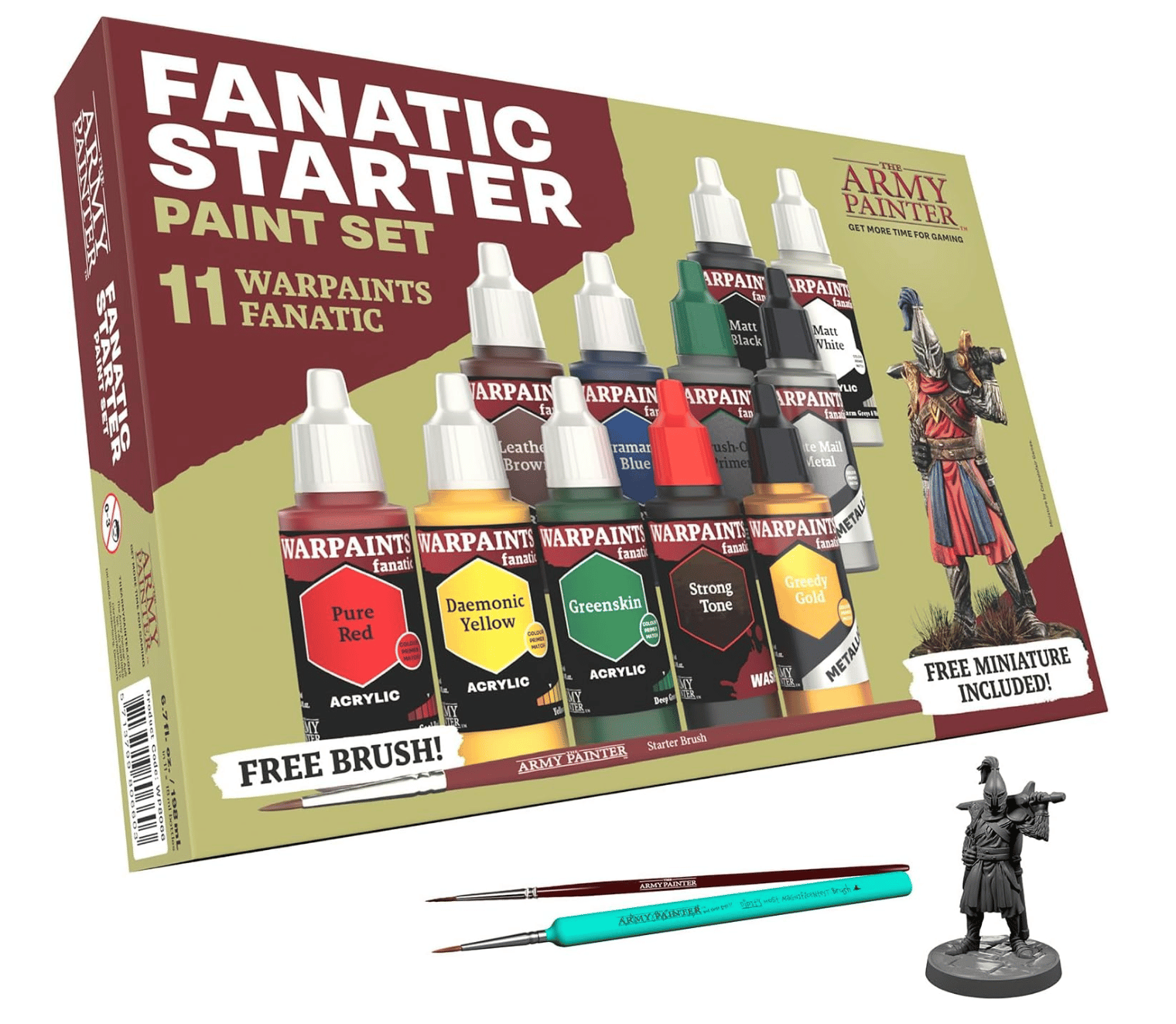
Try the Army Painter Starter Paint Set on Amazon. It’s budget-friendly, includes a range of colors, and even comes with a brush or two to get you started.


Brushes

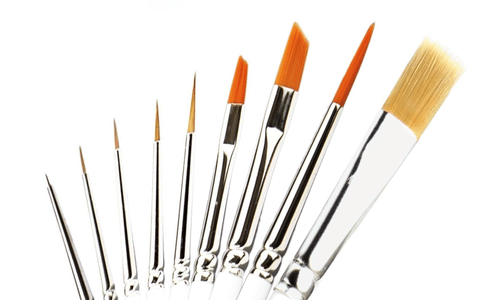
2. Brushes that won’t drive you crazy

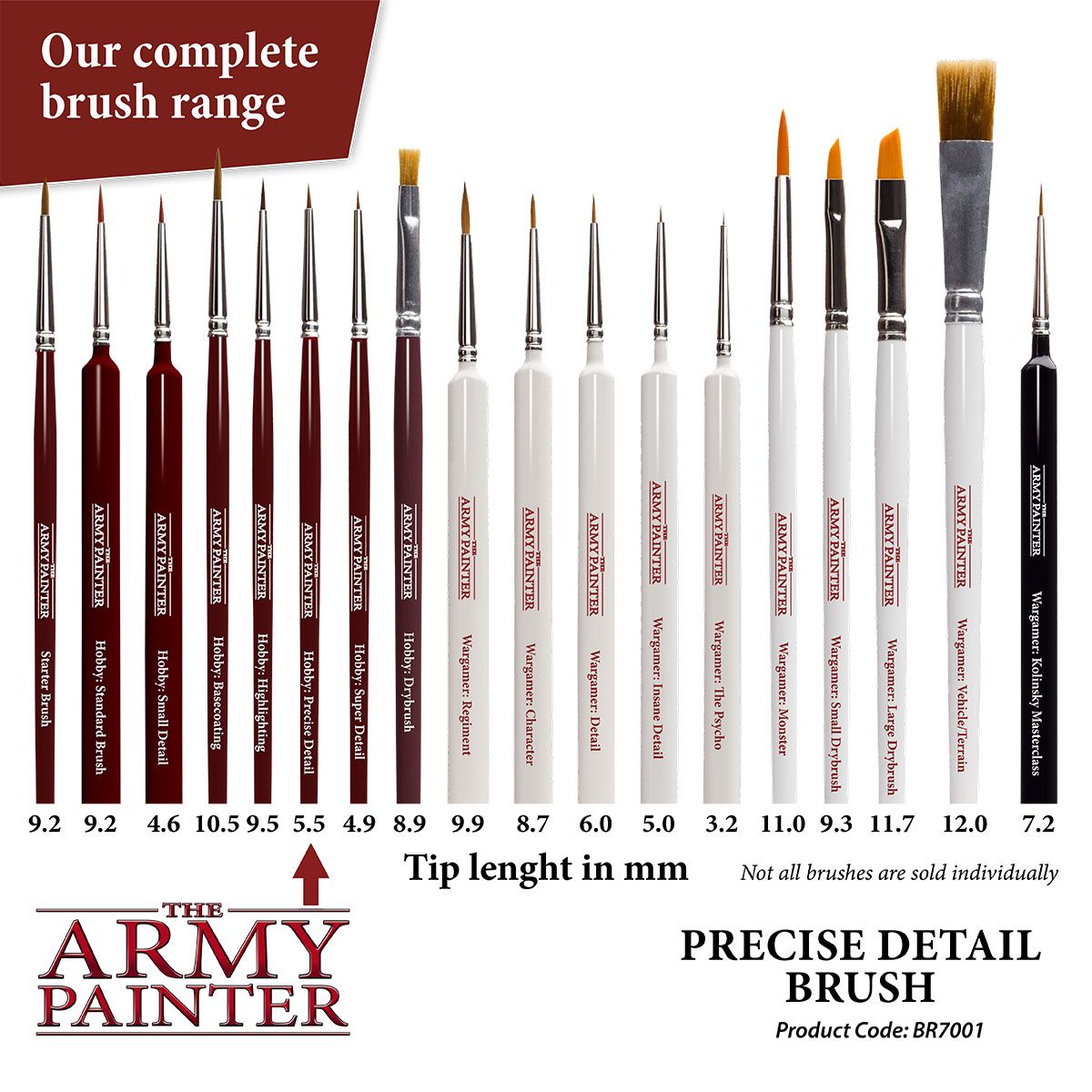
Go for Winsor & Newton Series 7 or Army Painter’s Wargamer brushes on Amazon. You don’t need 20 — just a few different sizes (a detail brush, a medium base brush, and a dry brush).


Hobby Knife

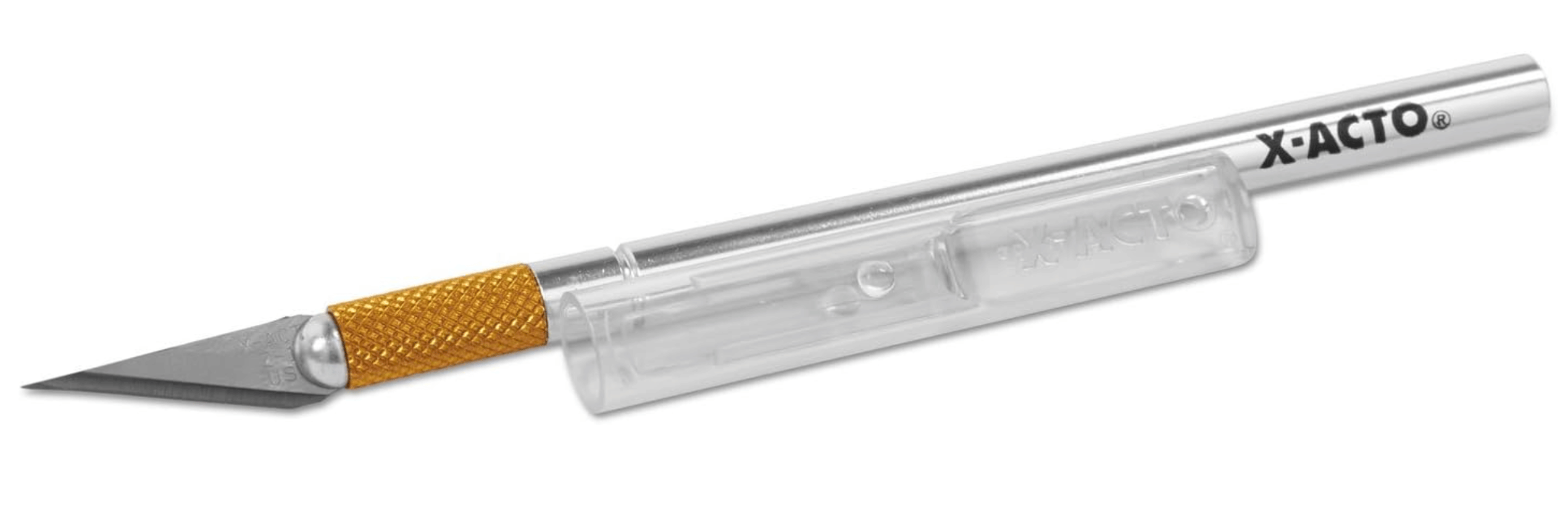
3. A hobby knife and cutters

You’ll use these to trim mold lines and clean up minis before painting. The X-Acto Precision Knife Set is a staple for every painter and can easily be found on Amazon.


primer

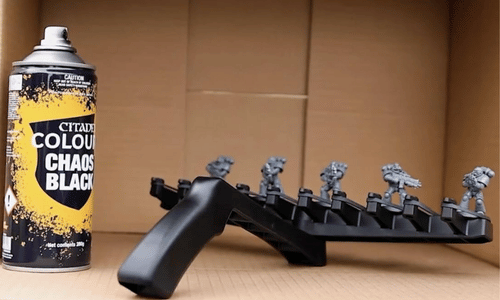
4. Primer

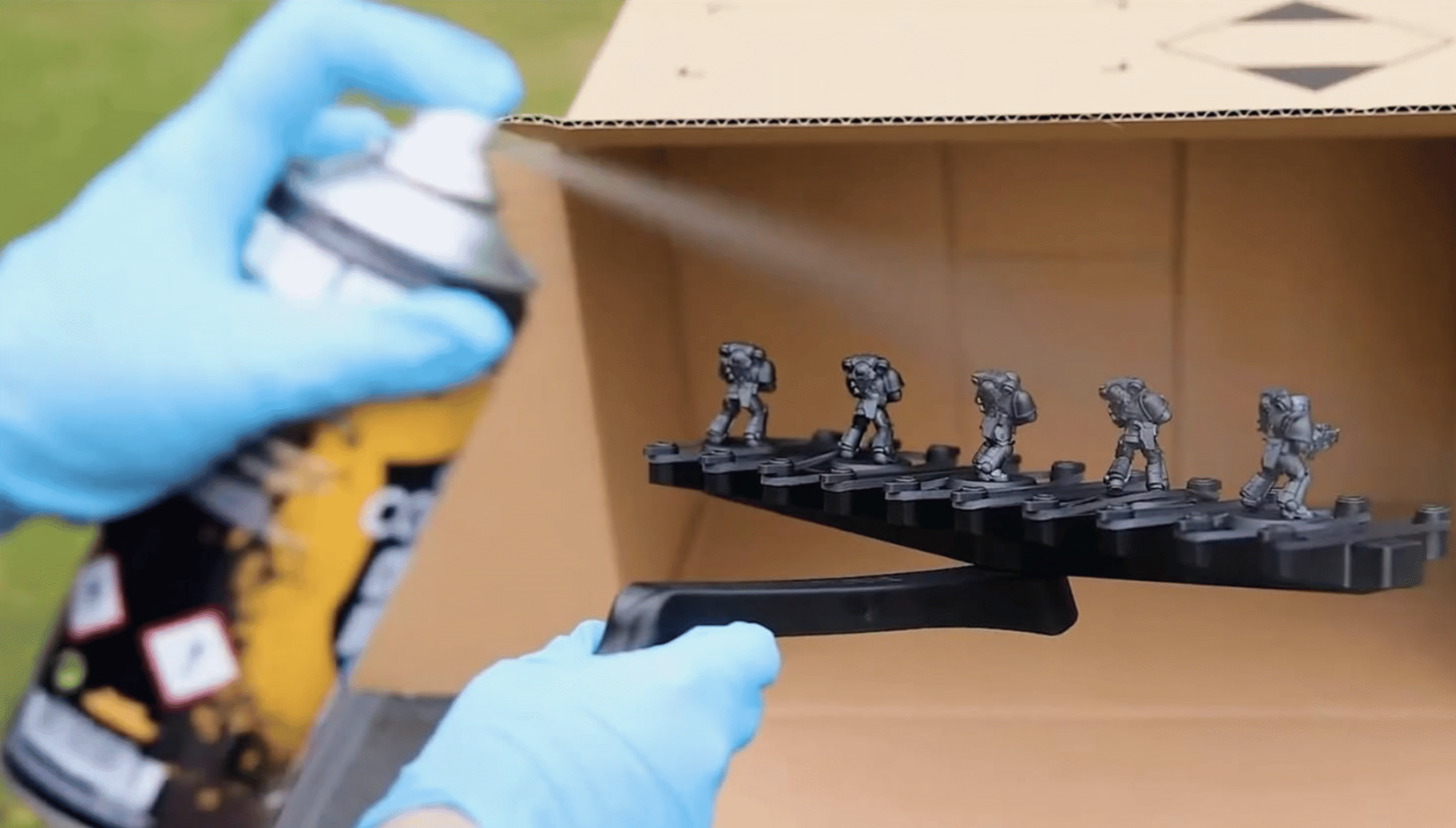
Always prime before painting — it helps the paint stick and last. Try Citadel’s Chaos Black spray or Vallejo Surface Primer. Both can be found on Amazon.


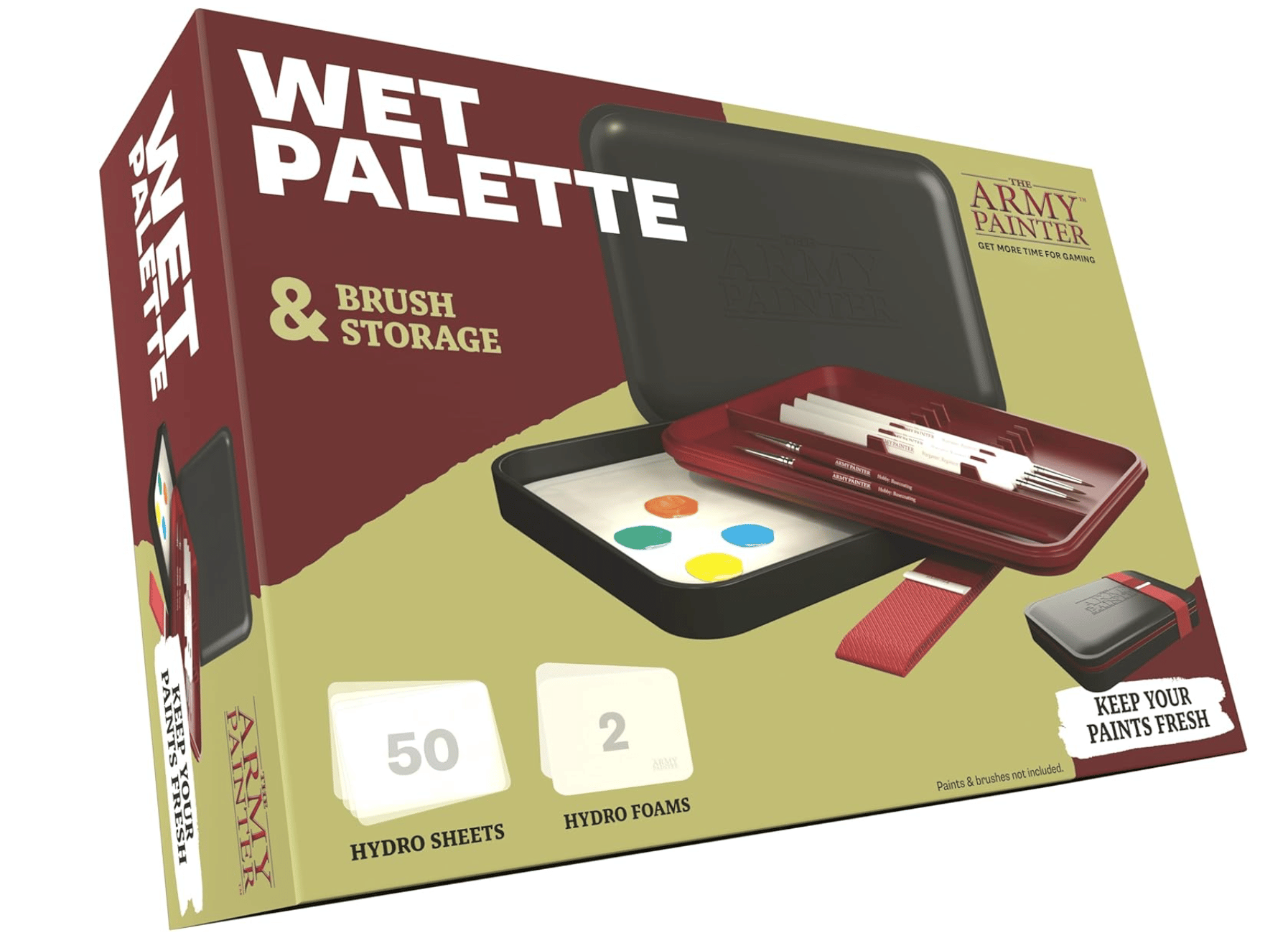
Wet palette

5. A wet palette

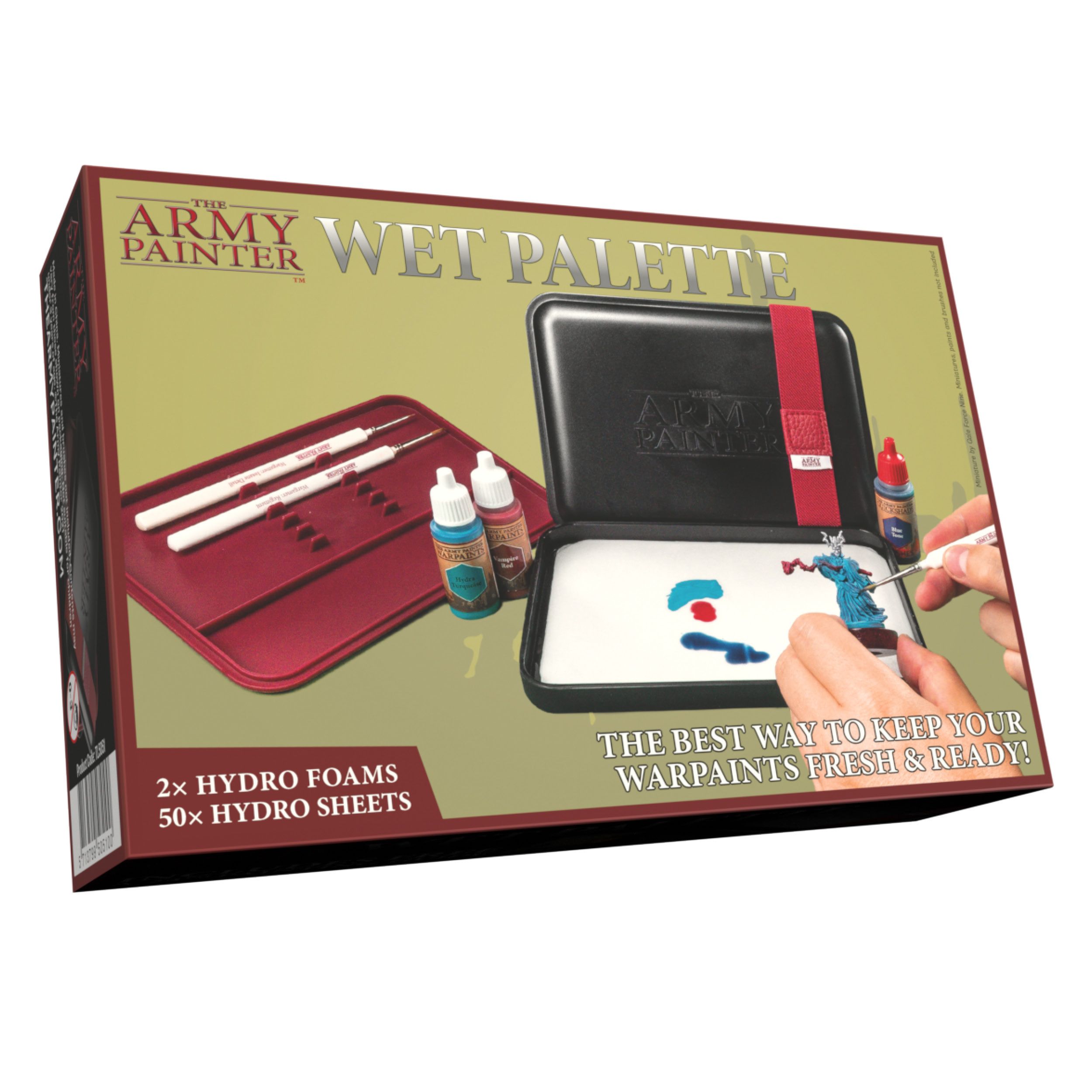
This one’s a game changer. Keeps your paints from drying out too fast. The Army Painter Wet Palette from Amazon is a fan favorite, or you can DIY one with parchment paper and a sponge.


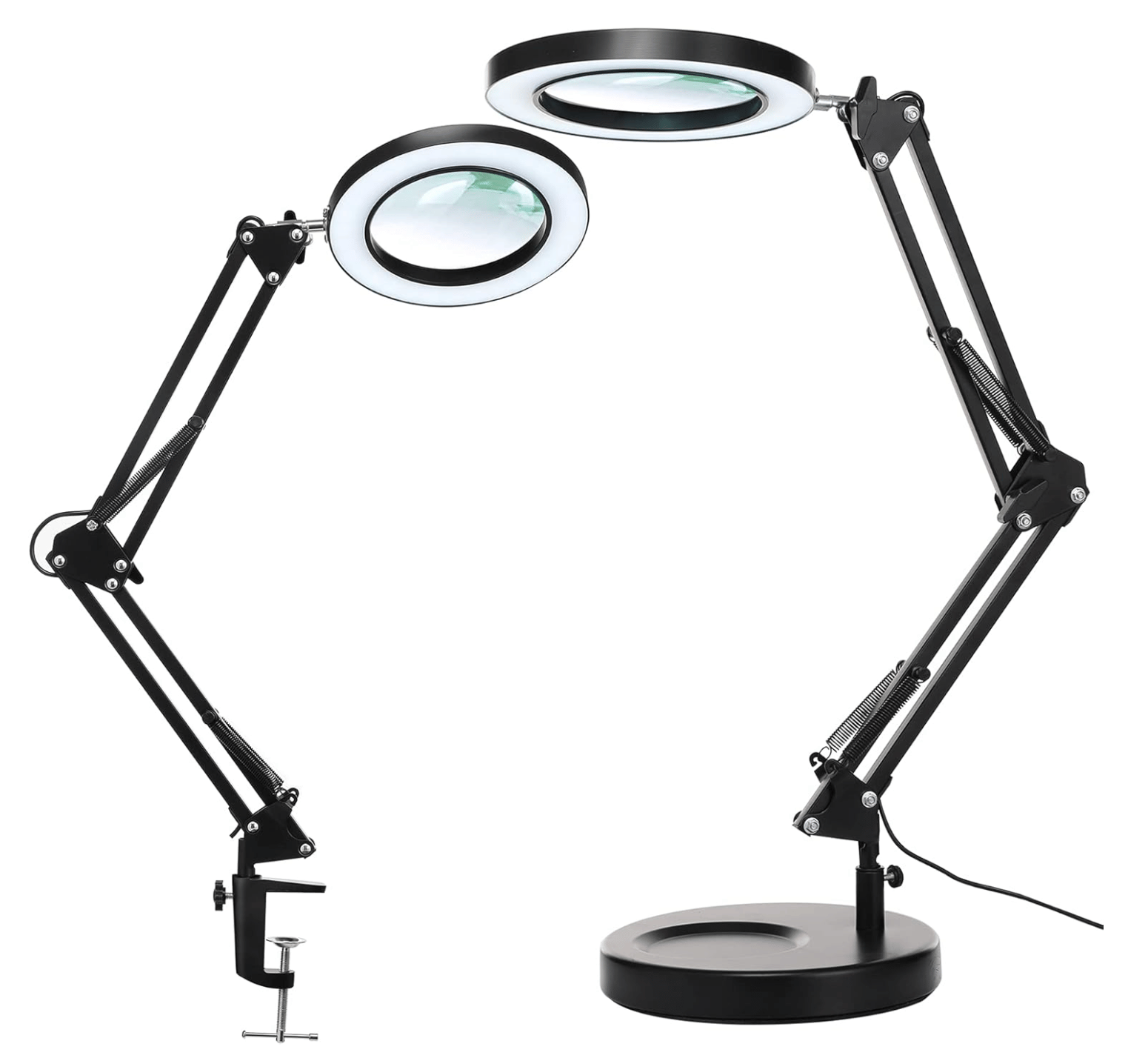
Lighting

6. Lighting and magnification (trust us)

Good light helps you actually see what you’re doing. A LED desk lamp with magnifier from Amazon makes all the difference. 


Miniature Painting Tips for Beginners

  • Thin your paints. Always. Think “creamy” not “chunky.” Two thin coats are better than one gloopy one.
  • Start simple. Don’t worry about blending and glazing yet. Just learn clean base coats and neat edges.
  • Wash and highlight. Washes bring out shadows (try Citadel’s Nuln Oil or Army Painter’s Strong Tone from Amazon). Then dry brush a lighter color over raised details — instant depth.
  • Handle carefully. Use a cork, old paint pot, or a miniature holder, like this one from Amazon, to grip your mini while painting. No fingerprints, no smudges.
  • Be patient. Everyone paints their first mini badly. The second’s a bit better. By the tenth, you’ll shock yourself.

The Joy of It All

Once you’ve got your paints and brushes, something happens. You stop worrying about perfection and start enjoying the process. Each brush stroke teaches you something new.

And when you finally put that painted mini on the table — your fighter, your goblin, your mech — you’re not just playing a game anymore. You’re playing with something you created.

That’s the real magic.

🎲 Guru Tip: If you’re painting with kids, give them a cheap plastic mini and let them go wild. Painting together is half art, half chaos, and 100% quality time. 

More from Tabletop Gurus

Continue reading

Board Game Accessories You Didn’t Know You Needed

Board Game Accessories You Didn’t Know You Needed

Level up game night with the best board game accessories you didn’t even know existed. From organizers to upgrades, these essentials make every game smoother (and way more fun).

.

Board Game Accessories You Didn’t Know You Needed

Let’s be honest — the right accessory can turn a good game night into a great one. And the wrong setup (hello, flying cards and lost tokens) can turn Catan into chaos.

If you’ve been playing board games for a while, you already know the little frustrations. Tiny baggies that rip, disorganized boxes, endless setup time. But here’s the good news: there’s an accessory for everything.

Whether you’re a casual gamer or a full-blown shelf-of-shame collector, here are the upgrades that actually make game night better.


Game Organizers & Inserts

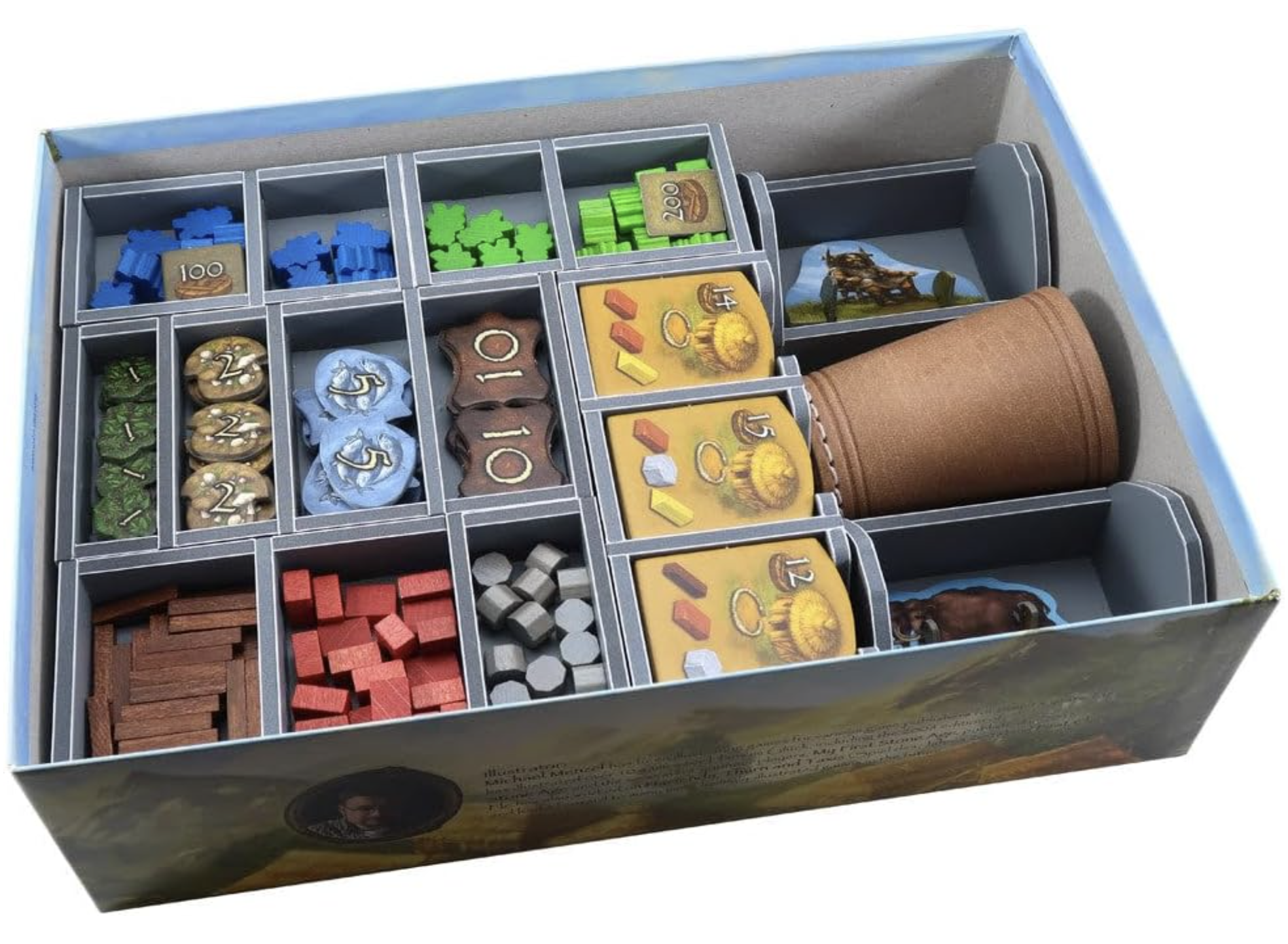
Say goodbye to box chaos. Inserts keep every token, tile, and mini right where it belongs. They make setup 5x faster and cleanup almost painless.

space foam core organizers

Foam Core Organizers

Try foam core organizers for a lightweight, budget-friendly way to keep all your tokens, cards, and minis in perfect order. They’re easy to assemble and won’t add bulk to your game boxes.

Find Foam Core Organizers on Amazon

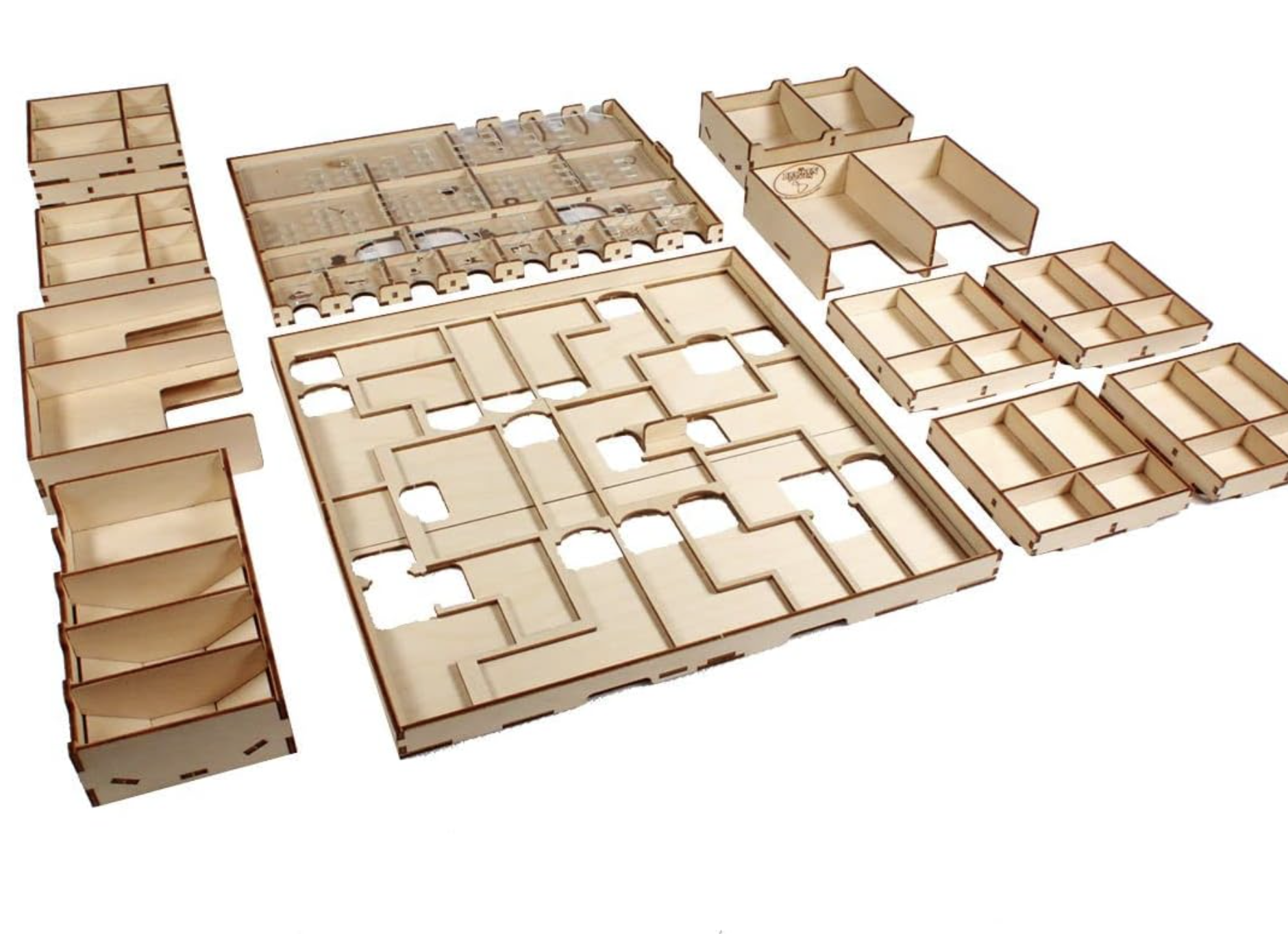
Broken Token wooden inserts

Wooden Inserts

For a more premium touch, upgrade to Broken Token wooden inserts — beautifully crafted organizers that make setup and cleanup almost as satisfying as the game itself. Both styles are available on Amazon and fit a wide range of popular board games.

Find Wooden Inserts on Amazon


Card Sleeves

They’re not glamorous, but they’re essential. A few shuffles without sleeves and your favorite cards start looking … well-loved.

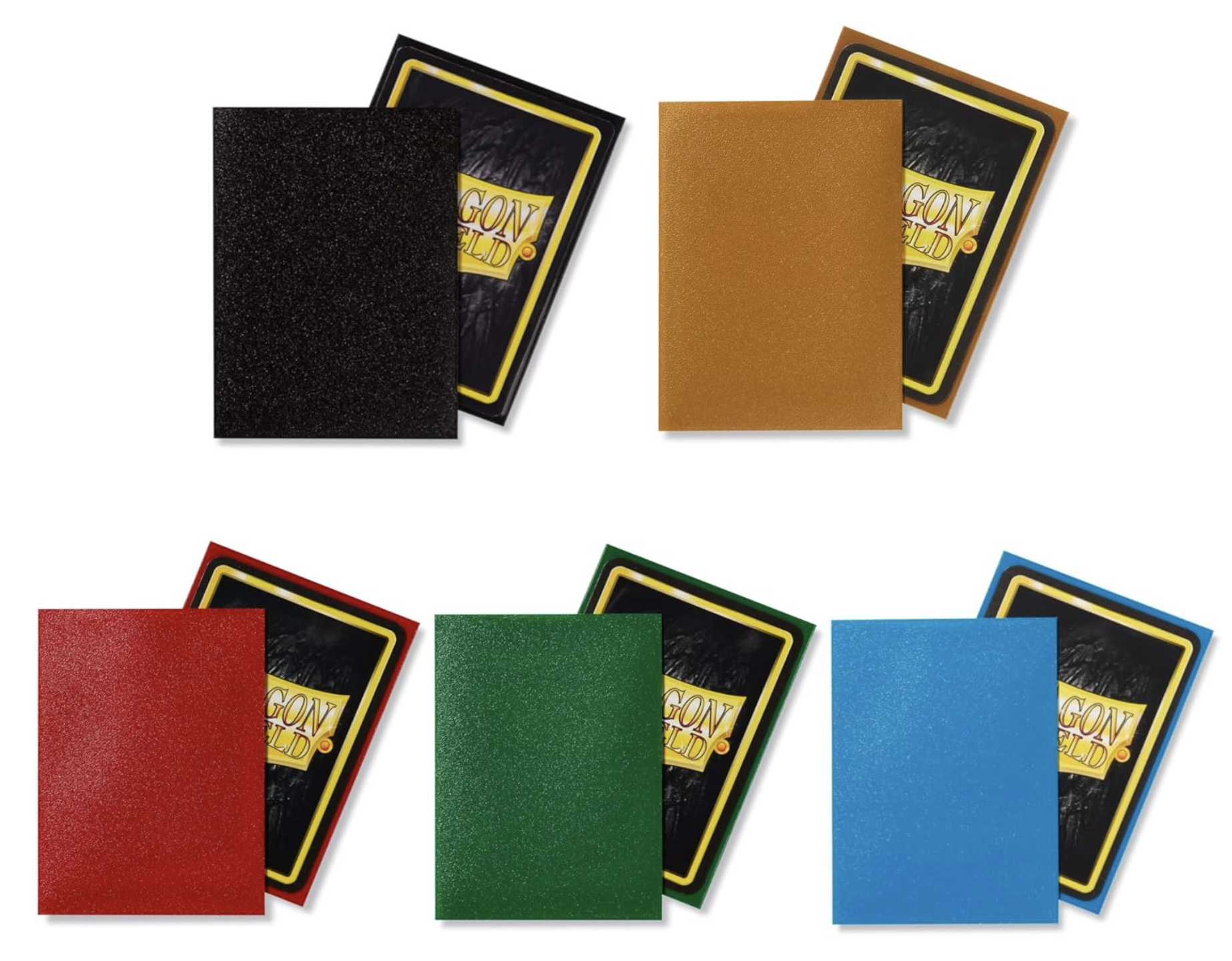
Dragon Shield Card Sleeves

Dragon Shield Card Sleeves

Protect your cards (and your sanity) with Dragon Shield Sleeves, available on Amazon. These fan-favorite sleeves are known for their durability, smooth shuffle feel, and long-lasting clarity. With dozens of color options, you can match every deck to your style — or your faction loyalty.

Find these card sleeves on Amazon


Battle Game Mats & Table Covers

Game mats are fun to use because they bring your favorite game or card game to life. They add color, texture and a professional feel to your setup. Make every game feel a little more special, and a lot more immersive.

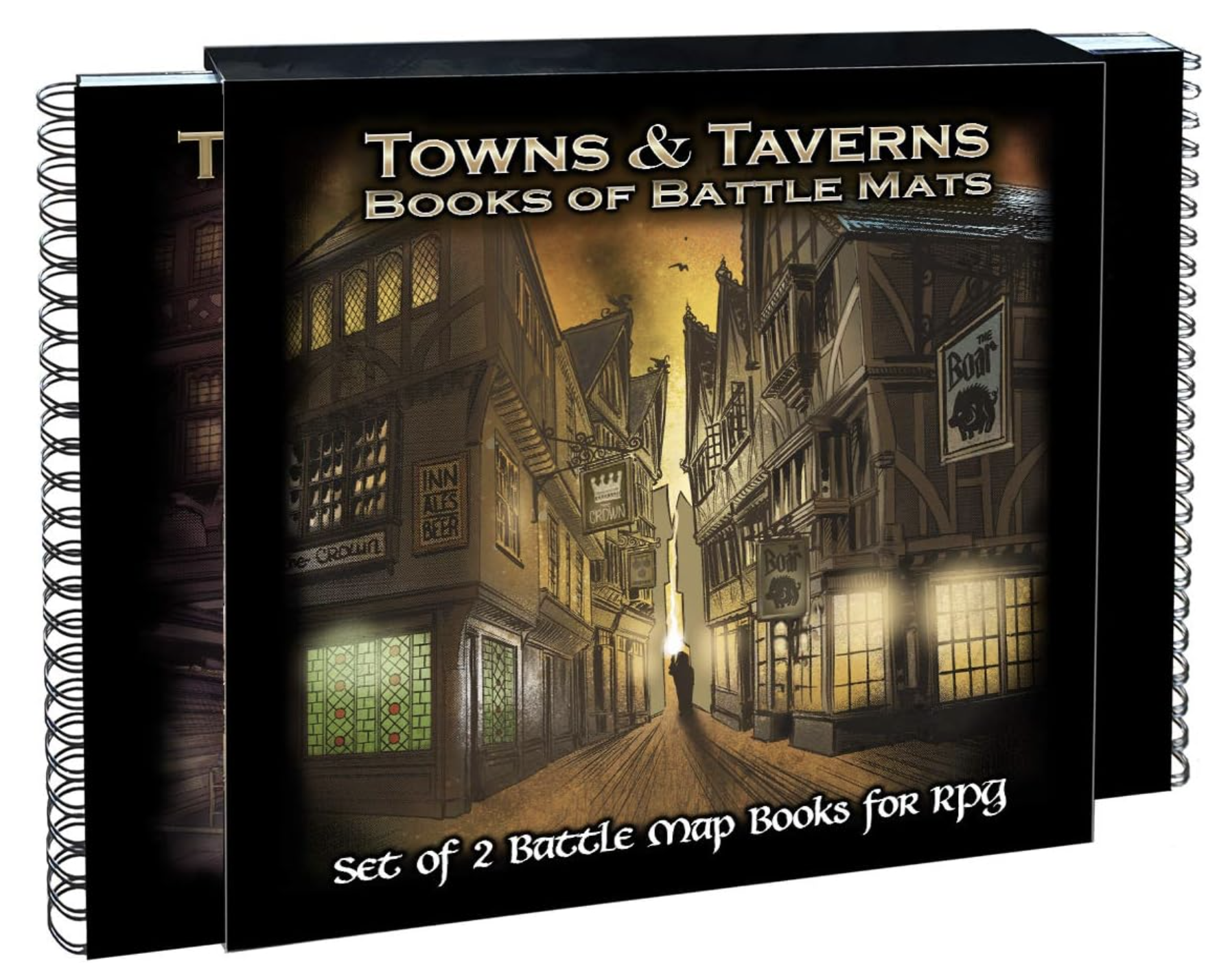
Loke Battle Mats

Loke Battle Mats

Bring your tabletop adventures to life with Loke Battle Mats, like the Towns & Taverns edition found on Amazon. Each spiral-bound book folds flat to reveal beautifully illustrated, wipe-clean maps that instantly elevate your RPG sessions. Perfect for DMs who want immersive worlds without hours of setup.

Fiind Loke Battle Mats on Amazon


Dice Towers & Trays

No more runaway dice or dented tables. Towers keep the rolls fair; trays keep them quiet. It’s one of those upgrades you don’t realize you need until you use it once.

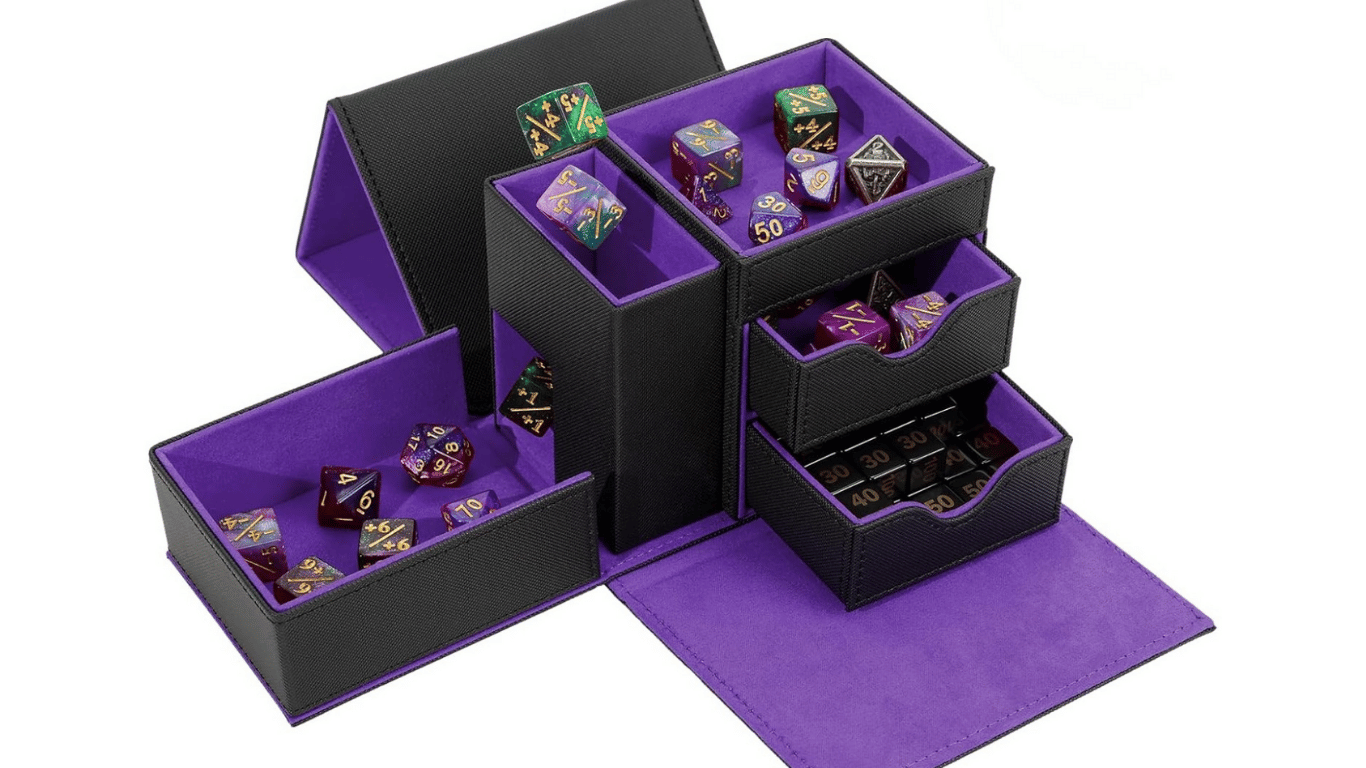
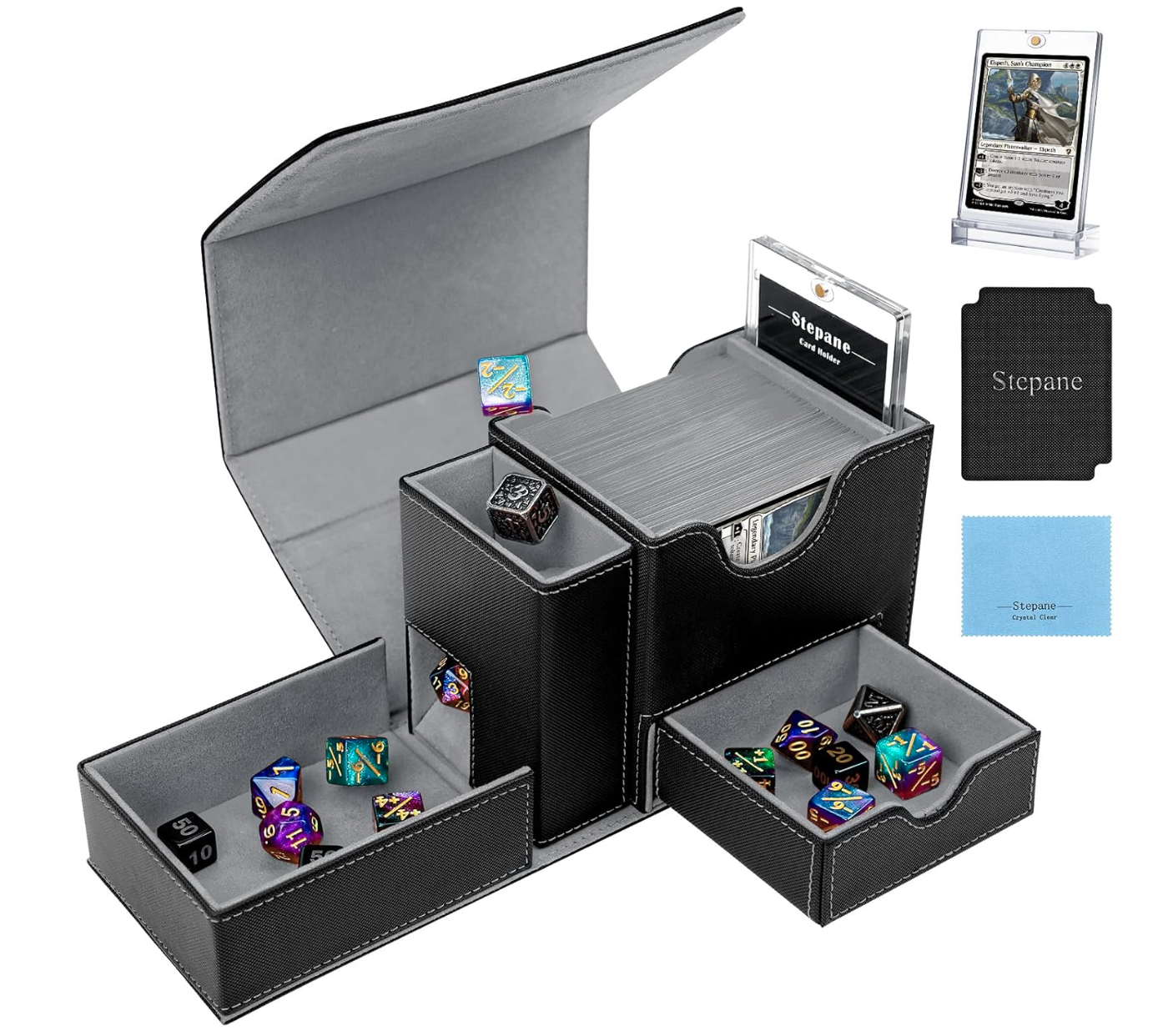
Deck Box with a Commander Display and Dice Tower

MTG Deck Box with Commander Display and Dice Tower

Keep your decks and dice protected with the MTG Deck Box with Commander Display and Dice Tower, available on Amazon. It fits up to 100 double-sleeved or 220 unsleeved cards, includes a built-in dice tray, and is scratch-resistant and portable — perfect for Magic nights on the go.

Find this Dice Tower and Deck Box on Amazon

Board Game Accessories You Didn’t Know You Needed

3-in-1 Dice Tower and Tray Set

Or, try a 3-in-1 Dice Tower and Tray Set, complete with a storage drawer and rolling platform. Whether you’re at home or traveling to a tournament, these compact towers keep your rolls fair and your dice in check.

Find this Dice Tray on Amazon


Component Upgrades

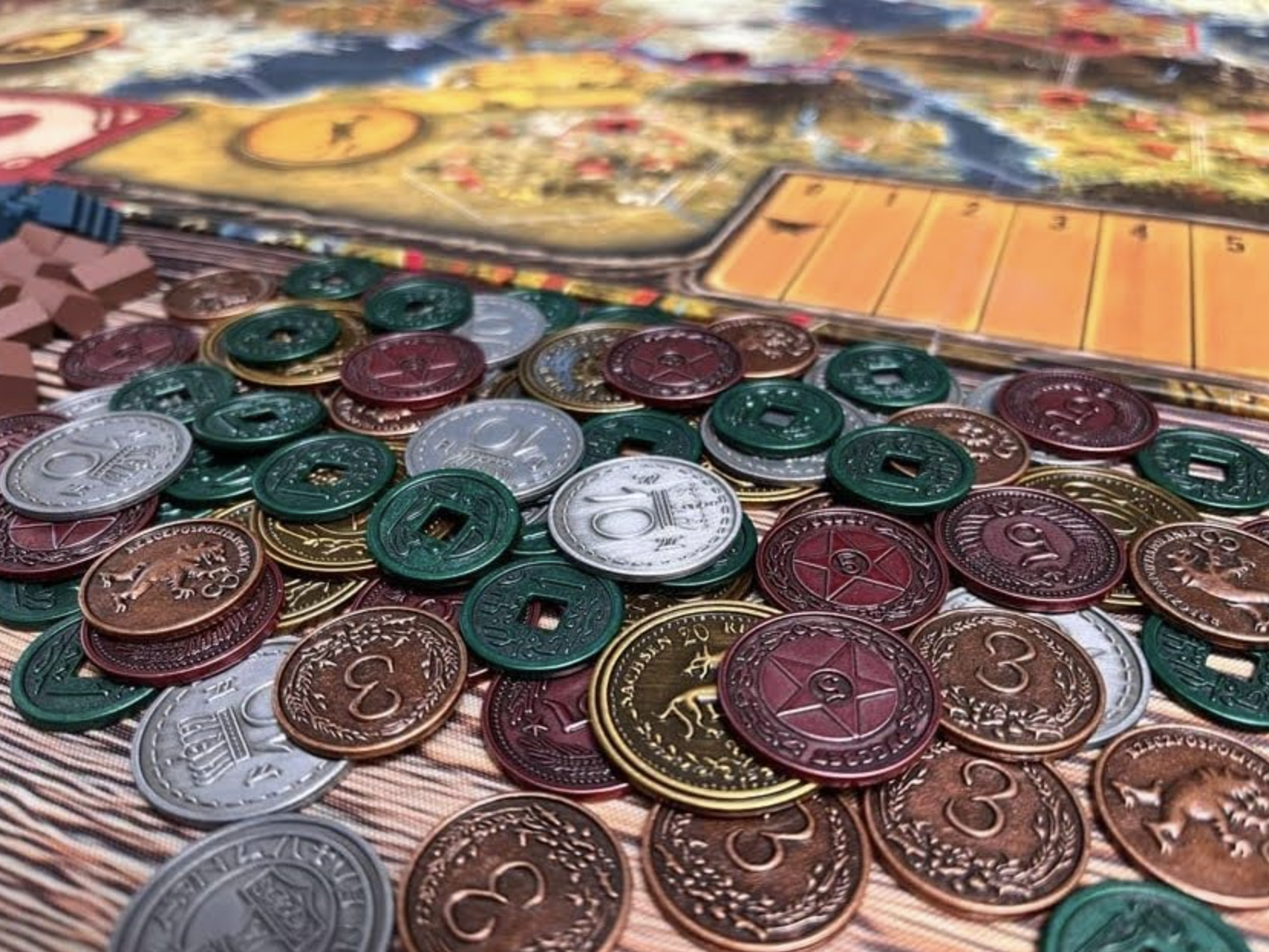
Replace flimsy cardboard coins with metal ones. Swap generic tokens for custom minis or realistic resources. It’s all about immersion — these tiny touches elevate your favorite games instantly.

Metal Coins

Metal Coins

Add a little luxury to your next game night with Stonemaier Games Metal Coins — solid, weighty pieces that make every purchase, trade, or treasure find feel that much more satisfying.

Find Metal Coins on Amazon

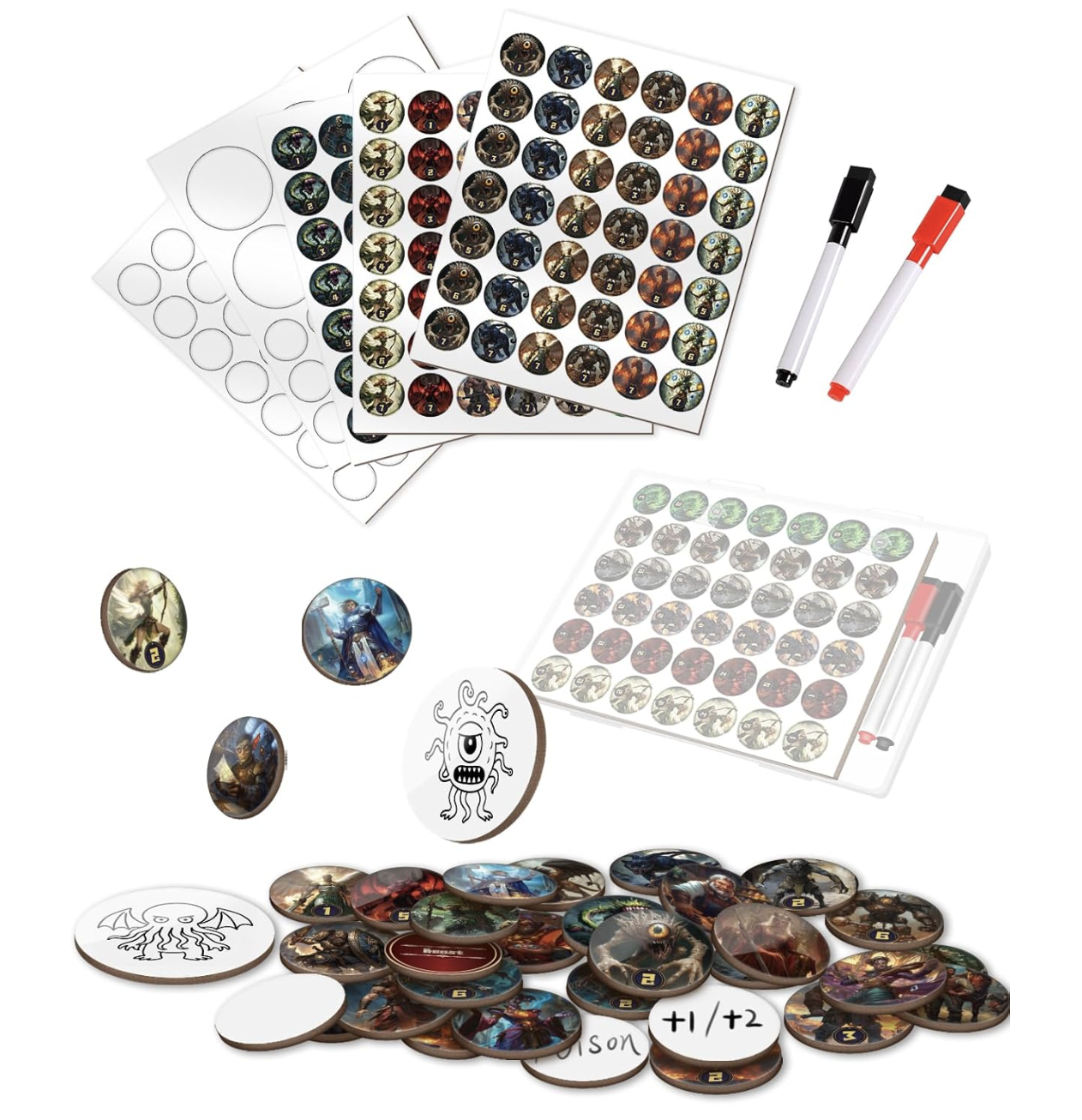
Dry-Erase Token Set

Dry-Erase Token Set

Pair them with a Dry-Erase Token Set, also available on Amazon, to replace paper trackers and clutter with a clean, reusable upgrade. Both options combine function with serious table appeal.

Find this Dry-Erase Token Set on Amazon


Lighting & Ambiance

A little mood lighting sets the tone. Warm light for cozy family games; LEDs for sci-fi adventures. Bonus points for candles that smell like adventure (yes, that’s a thing).

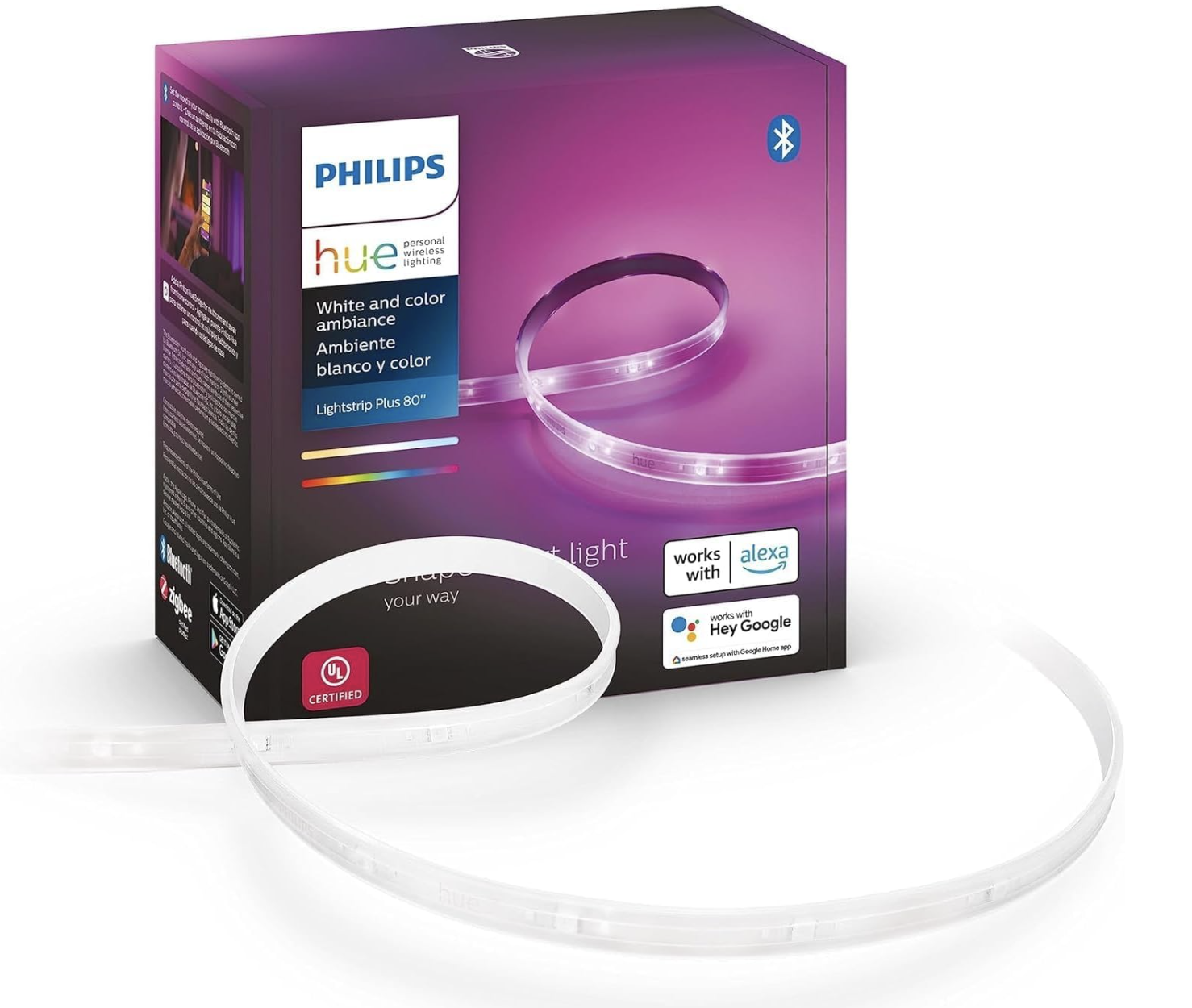
Philips Hue Light Strip

Setting the Mood

Set the perfect gaming mood with a Philips Hue Light Strip, letting you adjust your lighting to match the tone of your game — from cozy tavern glow to sci-fi neon.

Find this Philips Hue Light Strip on Amazon

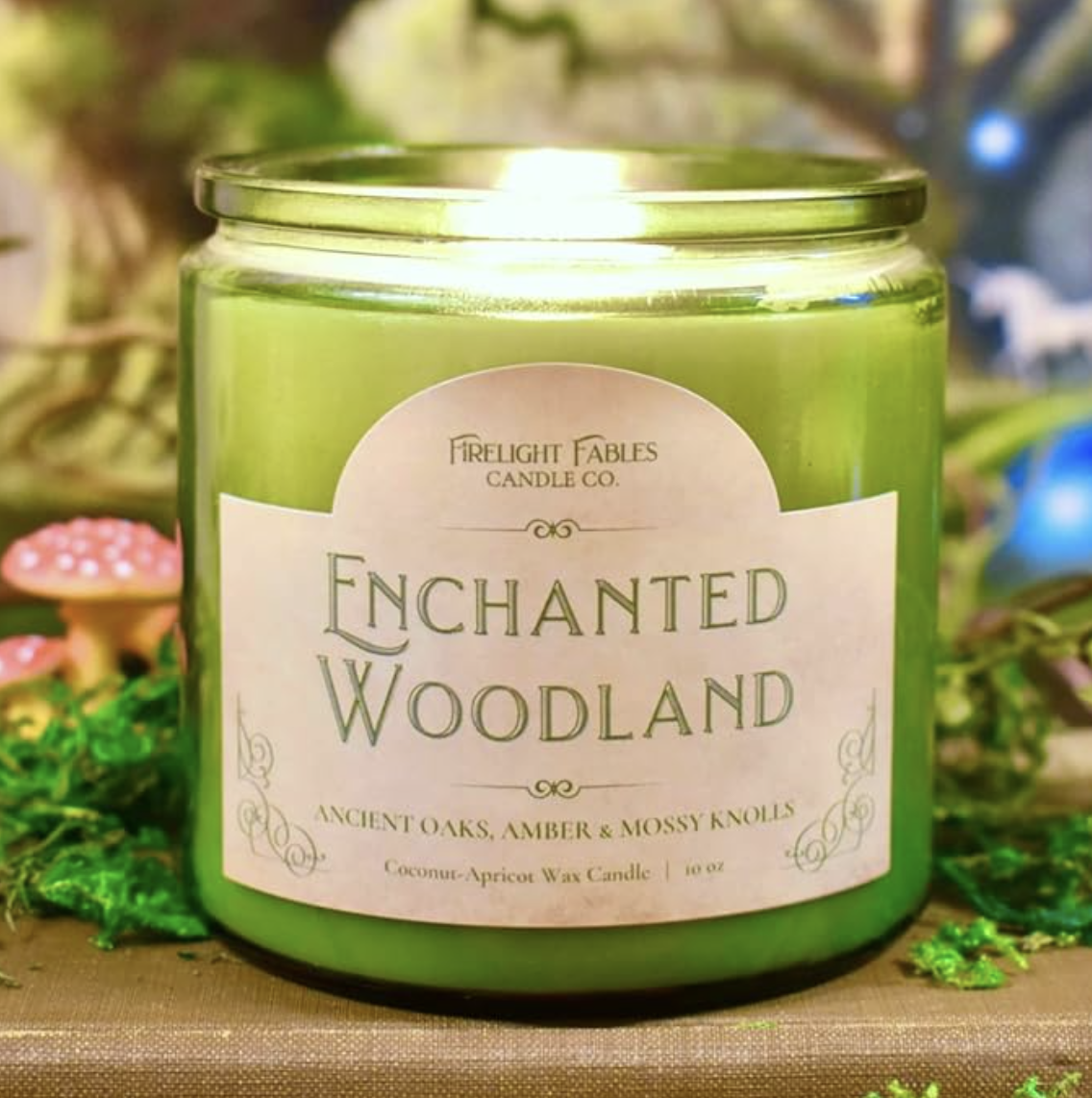
tabletop RPG candles

An Atmospheric Touch

Or, for a more atmospheric touch, try tabletop RPG candles, crafted to evoke immersive scents like “Dungeon,” “Forest,” or “Wizard’s Study.” They’re a simple way to make every session feel like a cinematic experience.

Find this Enchanted Woodland Candle on Amazon


Looking for the perfect gift for the gamer in your life? You don’t need to go big. Start with something simple like sleeves, trays, or an insert for their favorite game. These small upgrades add a touch of polish (and a lot less chaos) to every playthrough. Because sometimes, the best gift isn’t a brand-new game. It’s making the ones they already love even more enjoyable.

More from Tabletop Gurus

Continue reading

How to Teach Board Games Without Losing Your Mind

How to Teach Board Games Without Losing Your Mind

Teaching board games doesn’t have to be stressful. Here’s how to explain rules, keep players engaged, and actually have fun on game night.

How to Teach Board Games Without Losing Your Mind

We’ve all been there. You’ve invited friends over for a cozy game night. You’ve picked out something fun. Something that’s not too complicated, but enough to keep things interesting. Then, ten minutes in, you’re three rule explanations deep, your friends are glazing over, and someone just asked, “Wait … what are we trying to do again?”

Teaching board games can test your patience more than losing to a ten-year-old playing Uno. But it doesn’t have to be that way. Here’s how to make the process smoother, faster, and (dare we say) fun — for everyone involved, even your kids.

Pick the right game for your group

Before the rules even hit the table, know your audience.

If you’re teaching a group of casual players, Twilight Imperium probably isn’t the move. Start with something approachable — Catan, Ticket to Ride, or Azul. These games have clear goals, short turns, and easy-to-grasp mechanics that still feel rewarding. Proof’s in the pudding – Catan became our gateway game.

If your players are more experienced, then sure, break out the heavy hitters. Just remember: your goal isn’t to impress them with complexity — it’s to get everyone playing together.

Skip the rulebook (at least at first)

Nothing kills game night faster than someone reading the rulebook word-for-word.

Instead, learn it ahead of time and walk players through the basics as you go. Start with the big picture: “Here’s what we’re trying to do and how you win.” Then work your way into the details as they come up.
People learn best by doing, not by sitting through a lecture.

Use examples — real ones

If you can demonstrate a turn, do it. Show how movement works, what a trade looks like, or how combat resolves. Abstract concepts click faster when players see them in action. And if someone’s confused, let them take a mock turn before things officially start. That little bit of hands-on practice can make the difference between smooth sailing and chaos.

Embrace mistakes

Someone will forget a rule. Someone will miscount resources. Someone will build their settlement where they weren’t supposed to.

It’s fine. Let it slide early, keep the game moving, and circle back later if needed. The goal of a first playthrough isn’t perfection — it’s enjoyment. Once everyone’s hooked, they’ll care more about getting it right next time.

Keep the energy up

Nobody wants to feel like they’re in class. Add humor, celebrate good moves, and keep things moving even if there’s a little confusion. If the vibe stays light, people are more likely to ask questions, stay engaged, and (most importantly) want to play again.

End on a win

Even if the first game is messy, celebrate the fun moments — the ridiculous trades, the surprise victories, the epic blunders. That’s what people remember. Not who technically won, but how it felt to play together.

Teaching board games is an art, not a science. It takes a mix of patience, people skills, and humor. But when you pull it off — when the table’s laughing, the game’s flowing, and everyone’s asking, “Can we play again?” — it’s worth every rule you stumbled through.

So next time, take a deep breath, grab your rulebook, and remember: you’re not just teaching a game, you’re building a new group of gamers.


More from Tabletop Gurus

Continue reading

Miniature Painting Part 2

Miniature Painting

By Travis Perkins

Last time we looked at the basics for getting started painting, this time around let’s look at brushes, palettes, and some other painting products that might be useful for you.

Starting with Pallets:

I would one hundred percent recommend a wet pallet over a dry pallet for miniature painting and there is a plethora of options available for purchase. Personally, I make my own using a tuber ware container with some wet paper towel on the bottom then putting a piece of parchment paper over it. Having a wet pallet does a couple of things, the first being stopping your paint from drying out quickly. Having that cool wet layer underneath your paint causes it to dry (in the pallet) much slower than without it so rather than having to dip into the pot more frequently you can use what you put out. It also adds a nice space to mix paints if you decide to explore mixing colors or wet blending. (More on blending later). Be sure to change out the paper towels frequently though as with any sort of paper product that you leave water on it can get moldy.

Brushes:

Brushes are a tricky one in that there are so many flavors of brushes out there you really need to find the ones that work best for you. Some golden daemon painters have won using brushes that cost less than 15 cents apiece, while others swear by some expensive brushes that can last you years with proper care. I land somewhere in the middle and generally like to have 3 or 4 brushes that I can consistently rely on. My favorite is an army painter regiment brush that will run you 7-8 bucks but is your work horse. I use this brush for 80-90% of the models I paint because I am most comfortable with it, and I think it gives you good coverage without sacrificing too much in terms of fine detail. My second favorite brush is a good shade brush and for that I like the citadel medium shade brush that is just shy of 10 dollars. I use a lot of shades, washes, and contrast paints and this brush absorbs the thinner paints well and lets you spread it all over. Coming in third is not a single brush but rather a packet of makeup brushes (the cheaper the better) the stiffer though the better. I use these for dry brushing, and I try and dry brush as much as possible especially on larger pieces as it is quick and easy and usually produces good results. My final brush I like a good small, tipped brush like a Windsor newton 00 or extra small citadel brush, I only use this brush for very small details like very fine edge highlighting or dotting eyes etc. Find one you like and matches a price point you’re ok with and use it sparingly.

Other Tools:

There is a variety of other tools you can purchase for painting your little grey friends, but these are the three that I have found most useful. First is a snake light with magnifying glass. I might be dating myself by calling it a snake light (let’s go radio shack) but having a small mobile light that you can basically take anywhere is very useful. Add in the fact that if you want you can magnify something you’re painting like an eyeball, and it is very helpful in almost any instance. My second tool is one that I would not have normally bought but won in a raffle and I love it. It’s a refillable water pot, the one I use is from green stuff world, and it has refreshing water that you can clear out in between colors. It also has a nice groove that lets you kind of scrape the brush against to clear off any paint or pigment from something like dry brushing. It’s not something you need, and I never would have bought one myself, but man is this thing awesome, and I can’t see going to back to a regular water cup. Finally, I recommended getting a jar of paint brush soap and following the instructions on the jar of cleaning your brushes properly after every use. This little jar will add loads of life to your paint brushes, especially if you are using more expensive ones. If you are using 15 cent brushes and just tossing them after every session though you can skip it.

This is part 2 of my painting miniatures for people who have no idea how to paint miniatures guide, next time I am going to do a brief description on how to do wet blending, edge highlighting, dry brushing, and glazing which should give you a good start to your painting journey.

Continue reading

what kind of player are you?

What kind of player are you?

By Jacob Dungey

I’ve talked with a lot of people about playing Age of Sigmar. A lot of the time the conversation moves towards getting into the game and my question to the person is, “what kind of player are you?” 

What I mean by this is, are you a competitive gamer? A narrative one? Do you want to play what you want to play, regardless of if it’s “competitive” at the moment? I am a firm believer of know what kind of player you are and what kind of game you prefer, and you’re bound to enjoy yourself. I can count on one hand the number of games where I’ve walked away at the end and firmly had a bad experience and I’ve been playing Age of Sigmar since 2.0. 

I like to play on the more competitive side of things. I’m not a meta chaser, but if I’m going to play an army, I’m going to try and do the best I can as often as I can. If you play this game long enough, you’ll see all armies have their time in the sun as well as their time on the bottom of the barrel, competitively speaking.

Regardless of what kind of player you are, I would also encourage you to attend as many events as you can. This is for a number of reasons. First, the Age of Sigmar community is a fantastic one. The overwhelming majority of players are good people. Even top-tier players are great to play against. Most won’t be “that guy” and are amazing to play against, even as they are beating you on the table. They tend to be generous with their knowledge of the game, so ask them questions after the game is over. Ask them what they think you could have done differently and potentially some decisions you could have made differently throughout the game. 
Second, the majority of players are there to have a good time and don’t expect to go 5-0 at a large tournament. What that means is, if you’re not there to go 5-0, you’ll most likely get 4 out of 5 opponents that are there to roll dice and play with their favorite toy soldiers. Yes, you may get paired round 1 with that person that is trying to go 5-0, and that may be a less enjoyable game overall, but from round 2 on, you’ll most likely be playing people that are a similar type of player as you. 

Third, you tend to get exposure playing against armies you wouldn’t normally get to play against otherwise. Most people have a group of players they play with on a consistent basis and, within that group, there isn’t access to every single army in the game. As a result, you tend to get a lot of experience against, say Stormcast Eternals, but little to no games in against Nighthaunt. Going to events gives you the experience against armies outside your typical group of opponents. 

Finally, and, in my opinion, most importantly, you get to meet other members of the community. As I said initially, the Age of Sigmar community is a pretty fantastic collection of people. Getting out to events in your area will allow you to get to know more people in your area. Not only as gamers, but on an individual level. Seeing them and getting an update on what’s going on in their lives, as well as bringing them up to speed on yours, is a great way to build lasting relationships. No, you may not become best friends or have BBQs in each other’s back yards, but with some, you might. Having a common interest in gaming is a foundation to spark up conversation, learn more about people and make friendships. It helps build the community in positive ways and makes the community more welcoming and inviting to those that it otherwise would not. 

So, if you’re thinking about picking up Age of Sigmar and getting into the hobby, I would encourage you to. Look on the Games Workshop website for an army you like the look of and try to answer the question of “what type of gamer are you?” and I think you’ll truly enjoy this game, this hobby and, most importantly, this community.

Continue reading

Tasty Lava Cakes: All About That Base

Tasty Lava Cakes: All About That Base

By Jeff Campbell-Crawley

As a miniature war gamer, it’s all about getting that painted army on the table.  I spend a lot of time and effort trying to get my armies looking as good as possible to a point of diminishing returns.  There’s nothing quite like a war game with two well painted armies facing off against each other.

One way to really grab people’s attention is to have awesome thematic bases.  Resin or 3D printed bases are a great way to bring a thematic flare to your army.  For this project, hot lava is the theme and I really wanted to bases to feel hot and dangerous, like Frodo fighting with Gollum in Mount Doom.

Here is a great, and easy way to really make your lava bases pop.  This entire tutorial was done with 90% airbrush.  I used a Harder & Steenbeck Infinity with a .02 size needle .

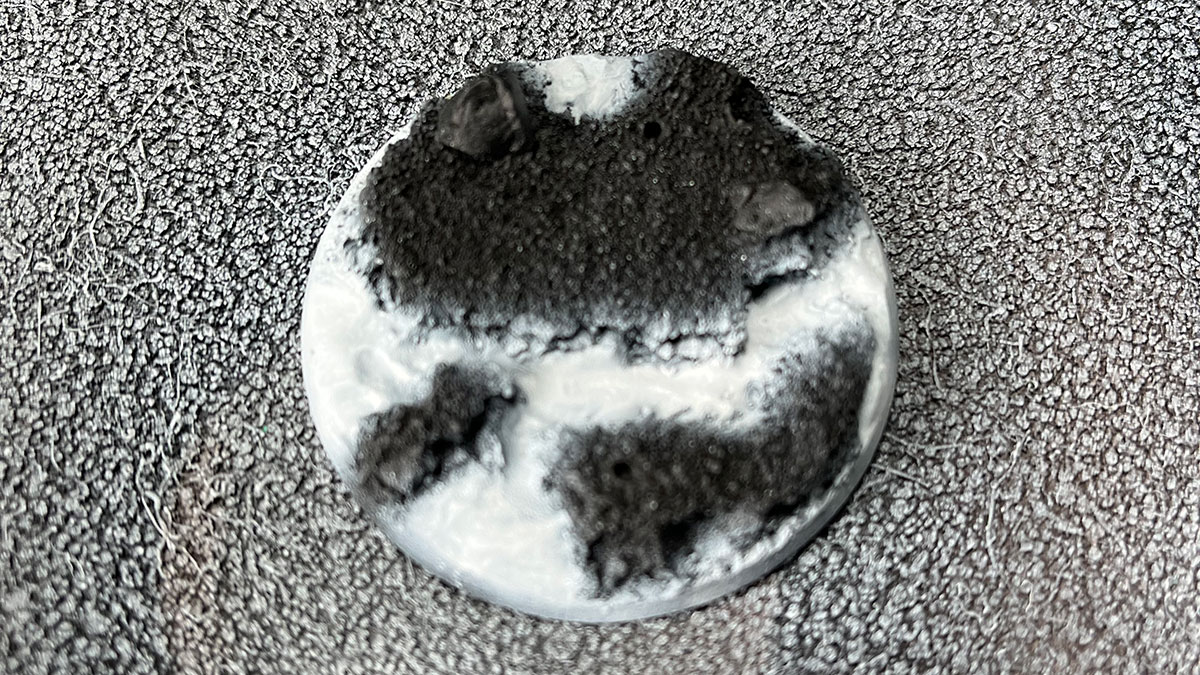
STEP 1:

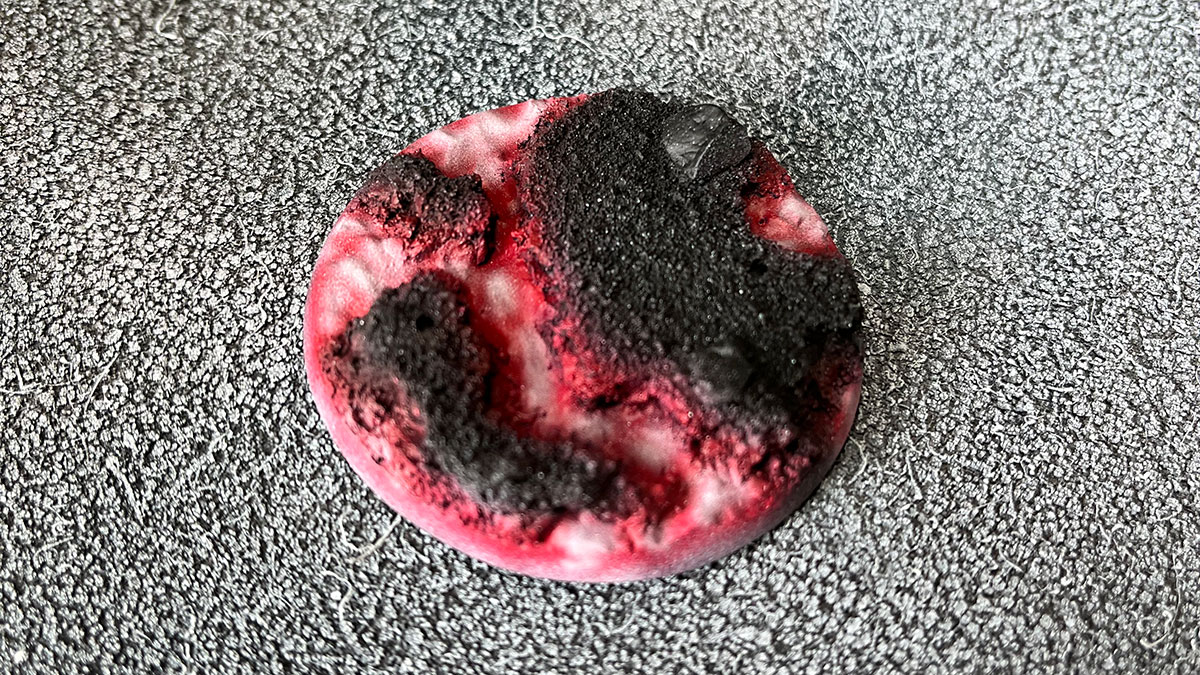
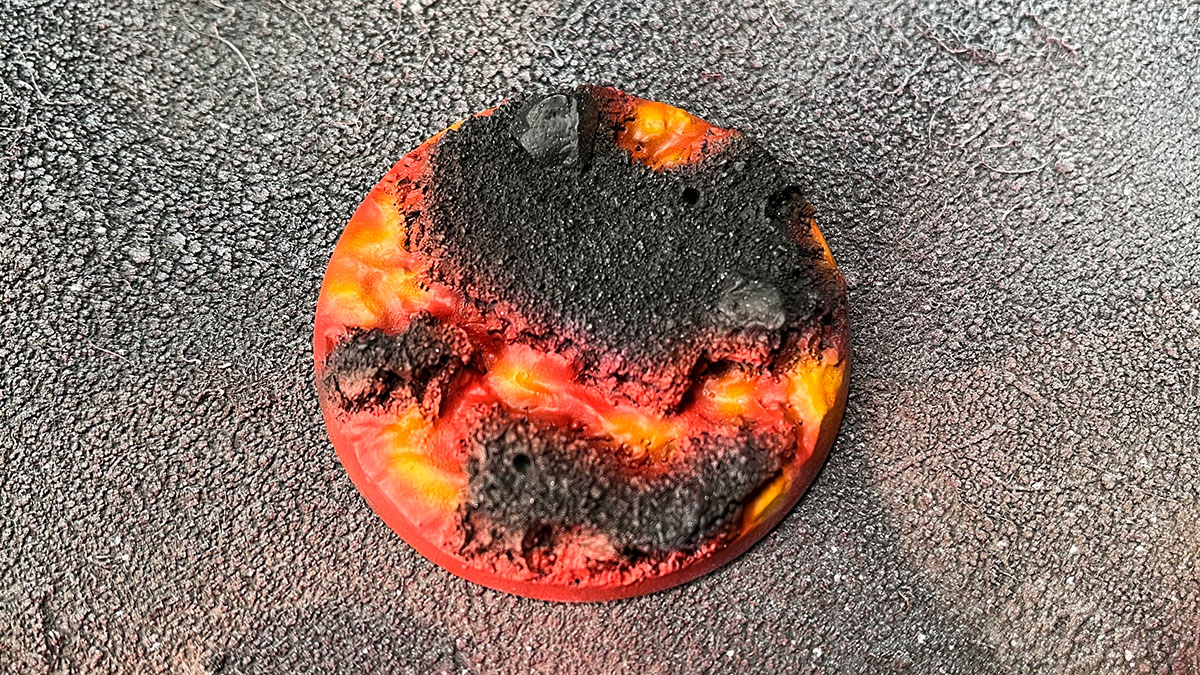
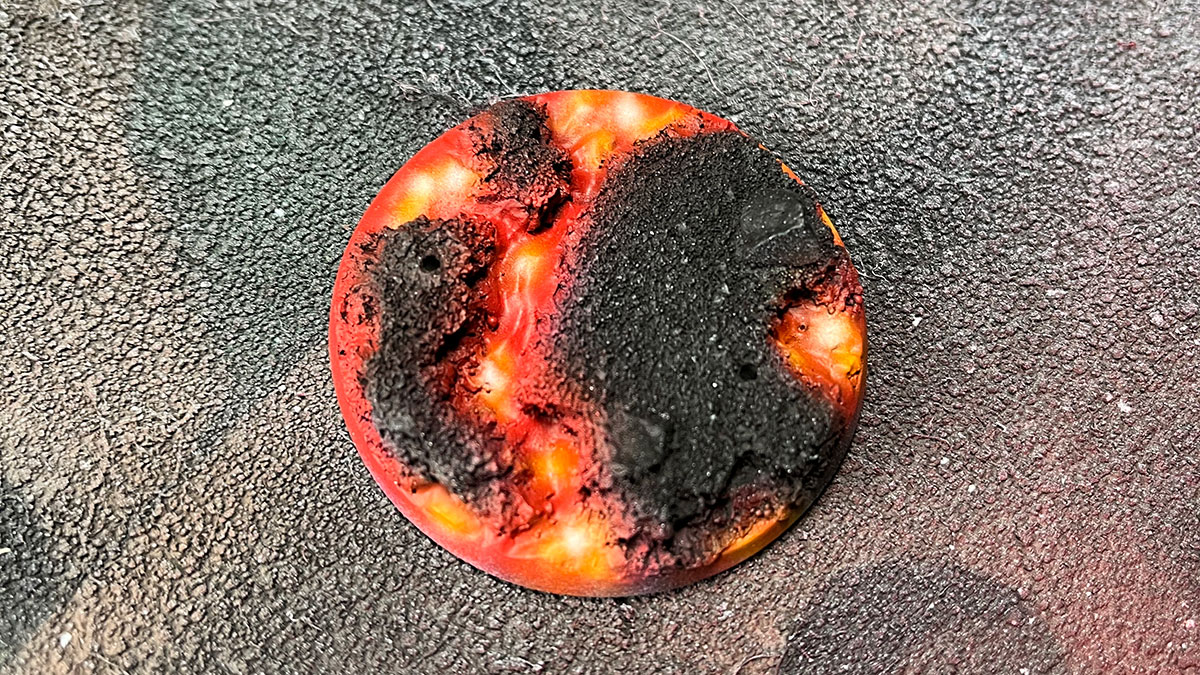
After priming the base black, apply white over the lava area, for this project (and almost any white paint I use with an airbrush) I used Vallejo White Artist Ink.  Try to keep the white contained to the lava area as much as possible, but you don’t need to go to drastic measures.

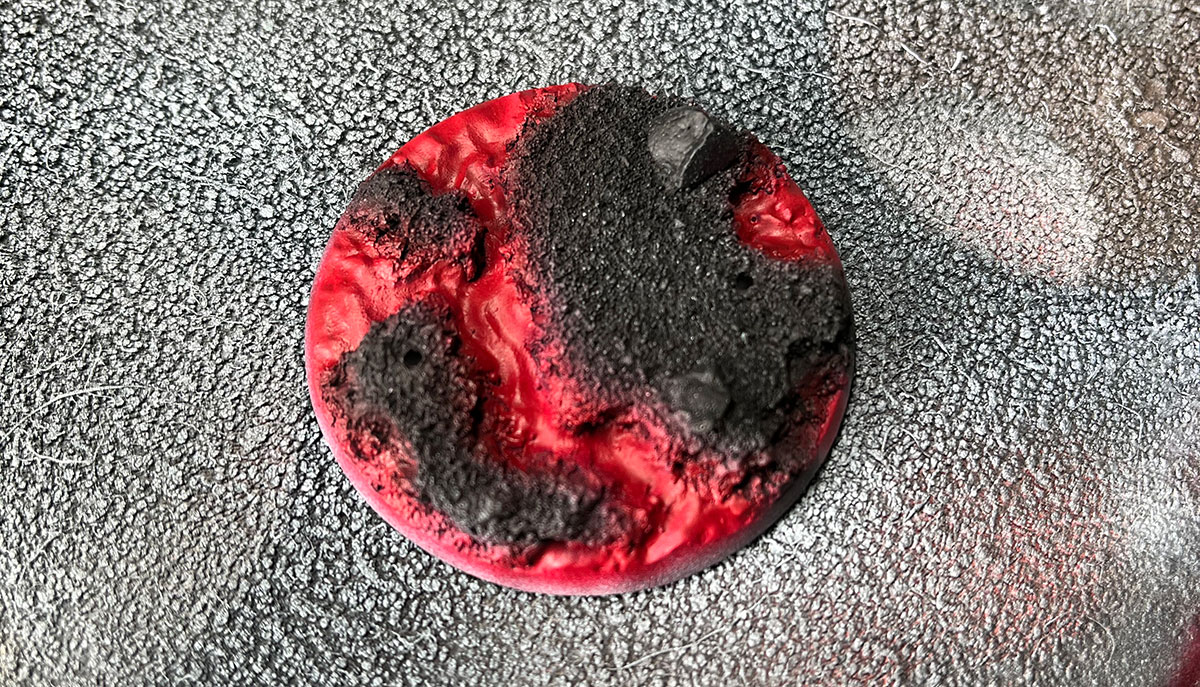
STEP 2:

Grab a deep red and cover all your white you put down in step 1.  I used Vallejo Air Gory Red, but grab any red that’s not too bright.

STEP 3:

Here’s where you need to display some airbrush control.  It’s time to start adding some extra heat to the lava.  Use the white you used in step 1, and strategically hit about 50% of the red with white, focusing more on the middle areas of the lava, away from the rocky edges.

STEP 4:

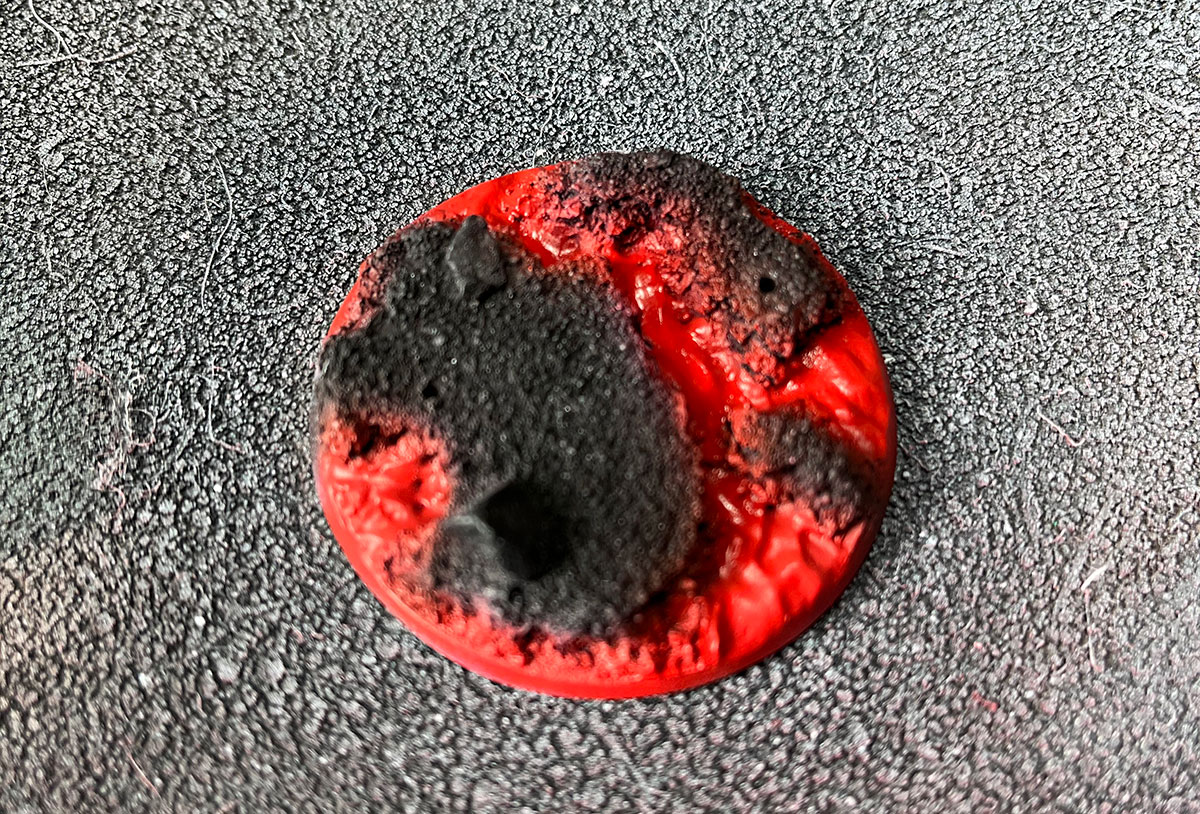
Find a brighter red paint, here I used Vallejo Air Blood Red.  Paint over all the red and white areas.  Red is translucent paint, so the darker red areas will stay pretty dark, it’ll just now have an brighter tint to it, while the white areas should now be very red.

STEP 5:

Load your white back up in the airbrush and now repeat step 3, instead now, you’re looking to cover about 50% of the bright red area (leave the dark red area alone).

STEP 6:

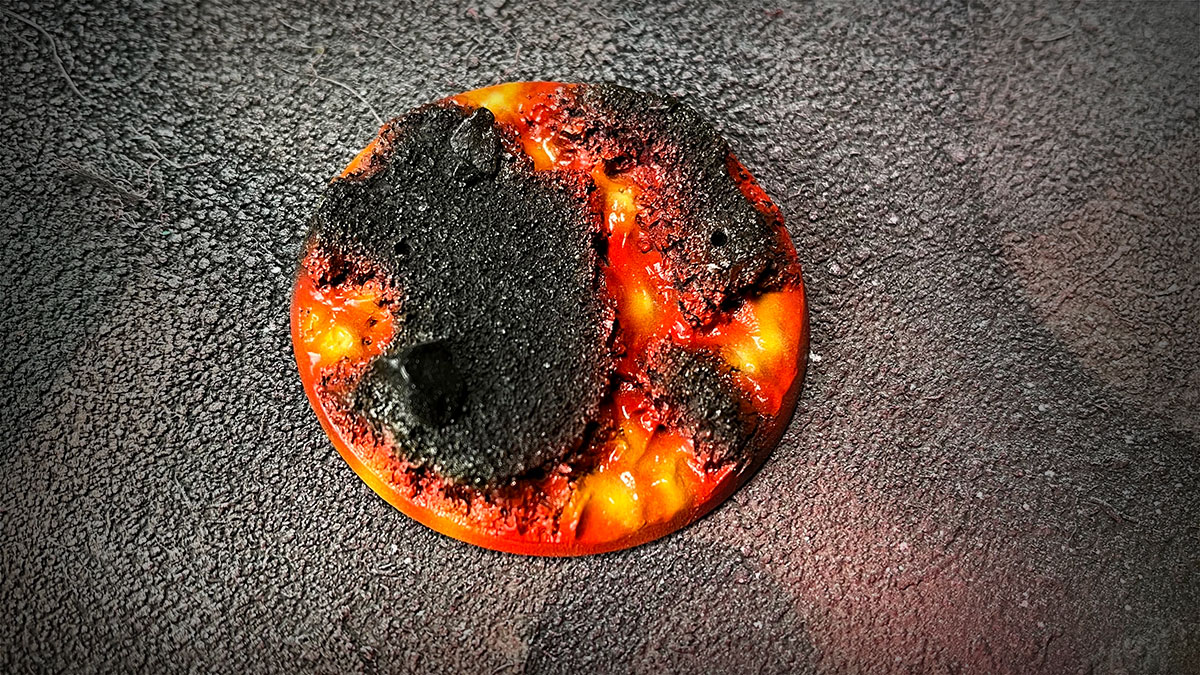
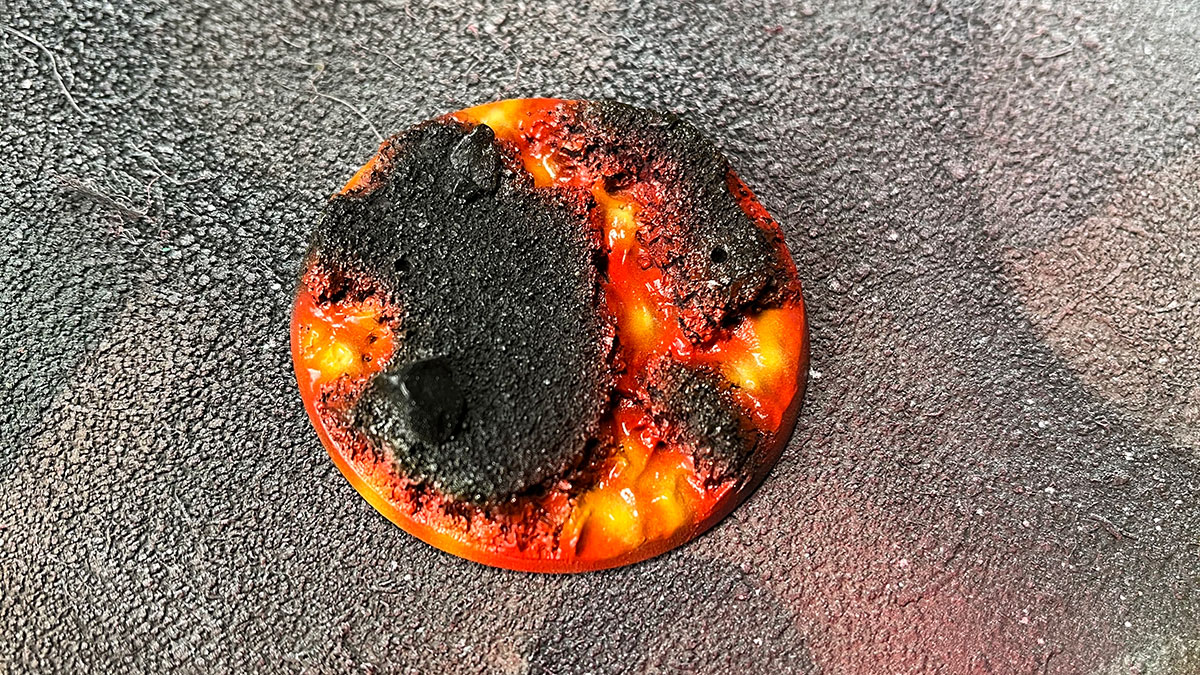
Find a good orange paint that leans more red than yellow. Here I used Vallejo Air Hot Orange.  Orange tends to be very translucent.  Paint the orange over the entire lava area.  The red areas will remain pretty red, but with an orange tint.

STEP 7:

Time to load that white one last time.  This time you’re only going to focus on very small areas, where the lava is the hottest. 

STEP 8:

To really bring the heat and tie all the colors together, we’re going to shoot a yellow filter over the entire lava area.  For this step, I used Badger Ghost Tint Yellow, it’s basically an ink.  Airbrush the ink over all the lava.  The white-hot points should now look bright yellow and painting the rest of the lava with the yellow will draw all of the colors together and give a very smooth transition.

STEP 9: FINAL STEP

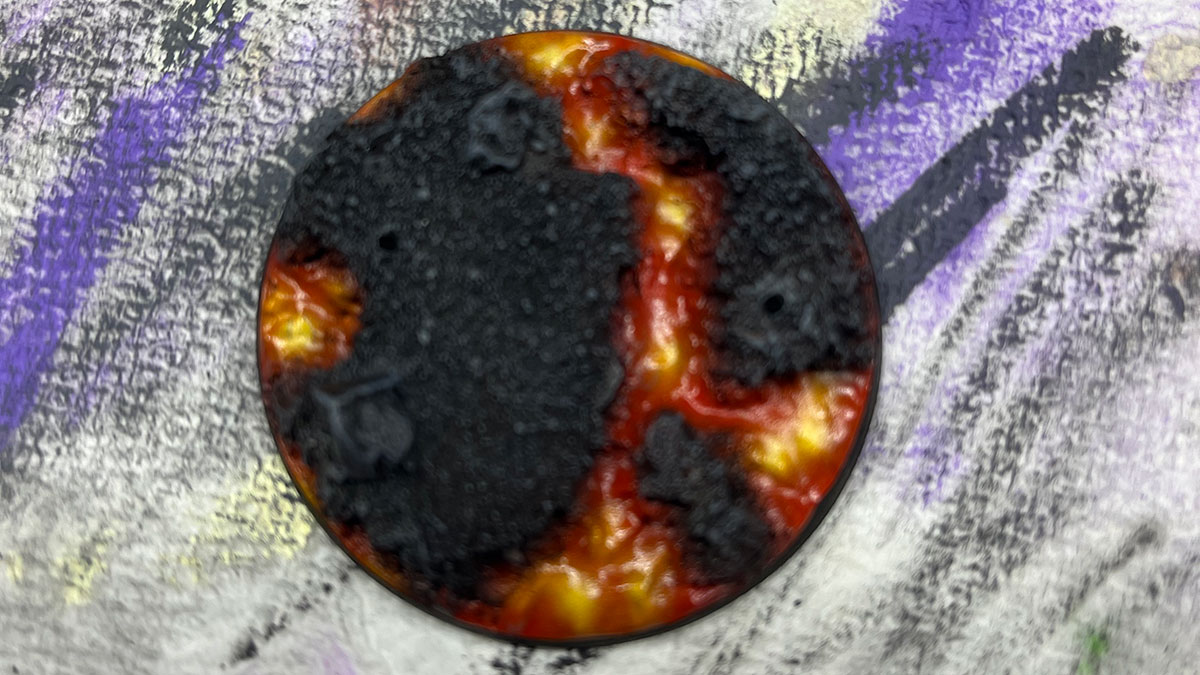
Now that the lava is looking hot and dangerous, it’s time to bring the rest of the base home.  Put some black in your airbrush and carefully hit the non-lava surface.  You can leave a touch of the lava color on the very edges if you want as that can give a bit of OSL feel to it.  After the black dries, hit it with a light drybrush of grey.  Then, I painted the rim of the base black with an analog paint brush.

9 Steps for a base feels like a lot, but this is fairly easy.  It works especially well when painting in large batches.

Continue reading

How I stopped worrying and learned to love the dice – One weirdo’s perspective on making the jump into competitive play.

How I stopped worrying and learned to love the dice – One weirdo’s perspective on making the jump into competitive play.

By Will Chaffee

It’s a well-known fact that the competitive wargamer is a fraction of a fraction of the wargaming hobbyist writ large.  There’s a lot of moving parts in that equation – as anyone taking the time to read an article like this would likely be aware of already.  

Actually making the leap can be a bit of a daunting proposition.  I know!  I’ve done it myself!  And since I went all in a few years back I hope that sharing my experience can help someone else out there do the same.  

Just to give you a bit of background – I’ve been interested in the hobby since I was a glassy-eyed child and my parents would use the hobby store as an unpaid babysitter while they went off to do their shopping and maybe sell my siblings for magic beans or whatever.  Somewhere around 1997 a friend and I start collecting and painting.  We perused the books, and sorta-kinda focused on something that might one day turn into an army – which explains my shamefully assembled and painted core of Eldar (now Craftworlds Asuryani) forces.  Then I got married and my painting buddy got a girlfriend.  And then WoW happened.  And then kids.  And then and then and then until 2018 rolls around and new and improved Killteam happens. 

The small scale of units but the big scale of terrain fanned a smoldering ember.  Priming and painting with the old buddy happened again and with it the internal promise of “At least trying to roll dice and move dudes around”.  That meant learning.  

And that’s how it happened.  As a 13-year-old child the rulebook was a daunting exercise that combined the forces of “making an effort” and “your dudes aren’t invincible”.  As a 40-year-old child the rulebook offered a way to play that everyone agreed on.  A structure of understanding around which narratives formed organically.  After I read and re-read the rules the larger picture came into view.  Yeah, it wasn’t perfect, but it was certainly good enough to fan that spark into something more – a deep desire to pit my understanding of those rules against someone else who is like-minded.  

And this is the critical juncture.  

It’s further where I’m going to make my pitch to you.

At the time I was weaning myself away from online gaming – and anyone who’s played online anything can relate to the problems of matchmaking. Even the crappiest unpopular games with dysfunctional matchmaking manage to get you paired up with someone without you doing anything or going anywhere.  And often it’s within minutes.  I knew it wouldn’t be that easy, but just going to local stores and hoping for a pickup game was largely unsuccessful.  

Ok it was just unsuccessful.

 This is a truly analogue experience we’re working with here.  And if you don’t have the patience for a 5-minute matchmaking queue then this is going to be eye-opening.  Depending on how your local store handles things, you’re probably going to need to put in legwork.

But, in my frantic search for any kind of opponent I happened upon a posting for a tournament happening 3 months and 70 miles away.

And it was therefore written in stone.  At least I had a game coming up!

There’s a wonderful sense of relief that comes with knowing the competitive expectations ahead of time.  Everyone there was going to try their very best.  That’s awesome!  I better do the same.

With 2 months to spare I managed to get a Killteam buddy.  He was looking to get some reps in on his way to Adepticon (and at the time I had no idea what that meant).  Oh yeah!

Alright – so this is the first part of my pitch.  My very first Killteam buddy is a guy named Nate. Yeah, sure we got our reps in.  It also led to fast friendship.  Eventually, our families also became close and we did other events together as well.

Thanks to getting some reps in with Nate, I went 5-0 at the tournament I attended.  It was narrow, for sure, but it was mine.  Nate didn’t do so well at Adepticon, even though his Deathguard were consistently 3-1 against my Astra Militarum.  

Come to find out, Nate’s Adepticon roomie ended up taking first in the Killteam event and went home with one of those shiny medals.  The hooks were in then.  I wanted one.  I needed one.

 Which is obviously how it snowballed from there over the course of years.  

My first actual-factual GT was the Michigan GT.  After years of Killteam and 3 painted Warhammer 40k armies, I obviously settled on Age of Sigmar.  

My reasons are my own.  

We can talk about that in a different article.

I went 3-2 in my first GT (and with only 4 practice games under my belt I feel pretty good about that in retrospect) and went home delighted but exhausted.

But here’s the next part of my pitch.  My very first GT opponent was a lovely gentleman named Kamran, who drove to 5 hours to the event which was also his very first GT.  I’ve since seen him at nearly every other event I’ve attended and every time it’s like running into an old school buddy.  

I later ran into some other players that I met at the GT in the local store and they invited me to join them for games – under the caveat that competition would be stiff.

YES.

I’ve been out with those guys nearly every week since.  

Yeah, I’ve been getting my crap pushed in nearly every week for over a year.  

Due to that I don’t feel like I can authoritatively write about winning strategies yet – but I can write about why you want to try.  Yeah, you’ll lose some games.  You might even go as boldly as me and lose most of your games.  

But now I’ve got some buddies I would move furniture for.  Now I know a married gaming couple out of Indiana that I’ve seen 3 times in my life and have giddily sat to chat with them about dwarves for an hour.

Yes, dear readers – you probably see where this is going.  The real prize is indeed the friends you make along the way.

Unfortunately, those weirdos start complaining when you jam them into a trophy case.  C’est la vie.

Besides the camaraderie – which is worth it all by itself – there are other reasons to get into the scene. 

And hey, I don’t know what got you into wargaming in the first place.  As mentioned before, I was primarily a painter for 20 years.  I didn’t think the tournament scene would be the type of place I would enjoy – I carried with me this internet forum-bred preconception that it would be a den of joyless try-hards.  

As if trying hard made someone lesser.  

Recall for a moment that we’re playing violent make-believe with dolls and dice.  Any amount of effort that your opponent puts into the game is entirely for the benefit of the person across the table from them.  

And when the game is done, you get to work through an after-action report together and geek out about lore or painting or dramatic moments granted by the dice and on and on and on.  

And if you stick with it, you will be lucky enough to have moments like watching your buddy Kamran end up on the livestream at Adepticon.  Or watching the kid who fell in love with the hobby after demoing with you once end up at the top table for game 5 the Michigan GT.  Or laughing until you cry with a delightful opponent because his priestesses could not drink blood and yodel simultaneously.  As I write this, I’m days away from the Motor City Mayhem GT and I legitimately hope that everyone who was there last year is there this year and I hope you can make it out too. 

Continue reading