Author: Tabletop Gurus

Privacy Policy

Privacy Policy

Effective Date: July 14, 2024

  1. Introduction

Welcome to Tabletop Gurus. We value your privacy and are committed to protecting your personal information. This Privacy Policy outlines how we collect, use, and safeguard your information when you visit our website.

  1. Information We Collect

We may collect the following types of information:

  • Your IP address.
  • Your contact information and email address.
  • Other information such as interest and preferences.
  • Data profile regarding your online behavior on our website.
  • Referring/exit pages, URLs, platform types preferences you submit and preferences that are generated based on the data you submit and the number of clicks. 
  1. Why we Collect your Data

We are collecting your data for several reasons: 

  • To better understand your needs.
  • To improve our services and products.
  • To customize our website according to your online behavior and personal preferences.
  1. How We Use Your Information

We may use the information we collect in the following ways:

  • To personalize your experience and respond to your individual needs.
  • To improve our website based on the information and feedback we receive from you.
  • To administer contests, promotions, surveys, or other site features.
  • To improve customer service and support needs more efficiently.
  1. How We Protect Your Information

We implement a variety of security measures to maintain the safety of your personal information when you enter, submit, or access your personal information. However, please note that no method of transmission over the Internet or method of electronic storage is 100% secure.

  1. Sharing Your Information

We do not sell, trade, or otherwise transfer to outside parties your Personally Identifiable Information unless we provide users with advance notice. This does not include website hosting partners and other parties who assist us in operating our website, conducting our business, or serving our users, so long as those parties agree to keep this information confidential.

  1. Third-Party Links

Occasionally, at our discretion, we may include or offer third-party products or services on our website. These third-party sites have separate and independent privacy policies. We, therefore, have no responsibility or liability for the content and activities of these linked sites.

Make sure to read the disclosure policy documentation of the website. 

  1. Cookies

We use cookies to enhance your experience, gather general visitor information, and track visits to our website. You can choose to have your computer warn you each time a cookie is being sent, or you can choose to turn off all cookies via your browser settings.

  1. Your Consent

By using our site, you consent to our website’s privacy policy.

  1. Changes to Our Privacy Policy

If we decide to change our privacy policy, we will post those changes on this page, and/or update the Privacy Policy modification date above.

  1. Contact Us

If there are any questions regarding this privacy policy, you may contact us at tabletopgurus@gmail.com

This privacy policy was created to comply with regulations and guidelines for privacy policies in the United States. 

Continue reading

Disclosure Policy

Disclosure Policy

Certain sections of this site include the ability to purchase products and services from other merchants, not directly from us. Some links on our site are “affiliate links,” meaning we could earn a commission if you click on the link and make a purchase.

Please be aware that we are not responsible for the quality, accuracy, timeliness, reliability, or any other aspect of these products and services. Additionally, merchants have their own privacy and data collection practices, which may differ from ours. If you make a purchase on a merchant’s site that we have linked to, the information you provide during the transaction, such as your name, email address, street address, telephone number, and credit card number, may be collected by both the merchant and us. For more details about a merchant’s privacy policies, terms and conditions, and additional information, please visit the merchant’s website directly.

We participate in the Amazon Services LLC Associates Program, an affiliate advertising program designed to provide a means for us to earn fees by linking to Amazon.com and affiliated sites.

Continue reading

The Timeless Appeal of Classic Board Games

The Timeless Appeal of Classic Board Games

Board games have been a cornerstone of social entertainment for centuries, transcending cultures and generations. From the ancient sands of Egypt to modern living rooms around the world, these games have not only provided fun but also educational value. Let’s take a delightful journey through some of the most iconic classic board games and explore what makes them timeless treasures.

Chess: The Game of Kings

Chess, often called the “Game of Kings,” boasts a rich history spanning over 1500 years. Originating in India under the name Chaturanga, the game made its way through Persia, where it was known as Shatranj, before finally reaching Europe during the Middle Ages. The evolution of chess continued, and by the 15th century in Spain, the rules were standardized into the modern form we know today.

Beyond its historical journey, chess is celebrated for its profound educational value. The game is renowned for enhancing strategic thinking and problem-solving skills, as each move requires meticulous consideration of potential outcomes, fostering forward-thinking and planning abilities. Recognizing these benefits, schools worldwide have integrated chess into their curriculums to aid in developing critical thinking skills among students. Interestingly, the word “checkmate” comes from the Persian phrase “Shah Mat,” meaning “the king is helpless,” a fitting testament to the strategic depth and cultural heritage of this timeless game.

Monopoly: The Capitalist’s Playground

Monopoly, created by Charles Darrow during the Great Depression, was originally called “The Landlord’s Game” and aimed to illustrate the consequences of land monopolism. Its engaging gameplay and relatable themes quickly made it a household favorite, encapsulating the highs and lows of capitalism. Over the years, it has become a cultural icon, representing the competitive nature of property ownership and financial success.

Monopoly, beyond being a source of entertainment, serves as a practical educational tool. It imparts valuable skills to players, such as money management, investment, and negotiation. Through its gameplay, it introduces crucial concepts like property ownership, taxation, and financial planning in a manner that is both informative and engaging. A fascinating fact that underscores its enduring appeal is that the longest game of Monopoly ever played lasted for a staggering 70 straight days, a testament to the game’s ability to hold players’ interest for extended periods.

Scrabble: The Wordsmith’s Delight

Scrabble, invented in 1938 by architect Alfred Butts during the Great Depression, began its journey under the name “Lexiko.” The game ingeniously combined elements of anagrams with a scoring system based on the frequency of letters in the English language. Over time, it evolved into the beloved word game known today, captivating millions with its unique blend of strategy and language skills.

Beyond its rich history, Scrabble serves as an excellent educational tool, helping to improve vocabulary and spelling skills. It encourages players to think creatively about word formation and recognize letter patterns, making it a fun and competitive way to enhance language learning. Schools often incorporate Scrabble into their curriculums to engage students in a dynamic and interactive manner. A fascinating fact about the game is that the highest-scoring word ever played in Scrabble is “caziques,” which earned a staggering 392 points, demonstrating the depth and potential of this classic board game.

The Game of Life: A Journey Through Choices

The Game of Life, originally called “The Checkered Game of Life,” was created by Milton Bradley in 1860. This classic board game simulates a person’s journey through life, starting from college and progressing to retirement, with various life choices influencing the outcome. Over the years, it has become a beloved staple in many households, capturing the essence of life’s unpredictable journey and the importance of decision-making.

Beyond its entertainment value, The Game of Life offers educational insights into the decision-making process and the consequences of those decisions. It covers critical aspects of life such as career choices, financial management, and family planning, providing young players with a controlled environment to explore real-life scenarios. Interestingly, in the original version, players could end up in a “Poor Farm” or achieve a “Happy Old Age,” reflecting the diverse possible outcomes of one’s choices and adding a layer of historical context to the game.

Clue: The Mystery Unveiled

Clue, known as Cluedo in the UK, was devised by Anthony Pratt during World War II. Inspired by murder mystery parties, it quickly gained popularity for its engaging whodunit format. The game invites players to step into the shoes of detectives, trying to solve the mystery of who committed the murder, with what weapon, and in which room. Its immersive and suspenseful gameplay has made it a beloved classic worldwide.

Beyond its entertainment value, Clue offers significant educational benefits by sharpening deductive reasoning and logical thinking. Players must gather clues, eliminate suspects, and piece together information to solve the mystery, thereby honing their analytical skills. An interesting tidbit about Clue is that the original game included a gun room, which was later replaced by more familiar locations like the conservatory and the library, reflecting its evolution over time to maintain relevance and engagement.

Backgammon: The Ancient Duel

Backgammon is one of the oldest known board games, with roots tracing back nearly 5,000 years to Mesopotamia. Its enduring popularity has allowed it to be played across various cultures, each adding their unique twists to the game. This ancient game has stood the test of time, evolving and adapting while maintaining its core strategic elements that continue to captivate players worldwide.

Beyond its rich history, Backgammon offers significant educational value, particularly in developing strategic planning and probability skills. Players must balance risk and reward, making decisions based on the roll of the dice while planning several moves ahead. An interesting fact about Backgammon is that the oldest known set was found in the Burnt City, an archaeological site in Iran, highlighting the game’s ancient origins and long-lasting appeal.


Classic board games are more than just pastimes; they are rich with history and educational value. From sharpening strategic thinking and enhancing vocabulary to teaching financial management and logical deduction, these games offer timeless lessons wrapped in fun and engaging formats. Next time you gather around a board game, remember that you’re partaking in a tradition that has brought joy and learning to countless generations. Happy gaming!

Continue reading

Board Game Overview: Wingspan

Board Game Overview: Wingspan

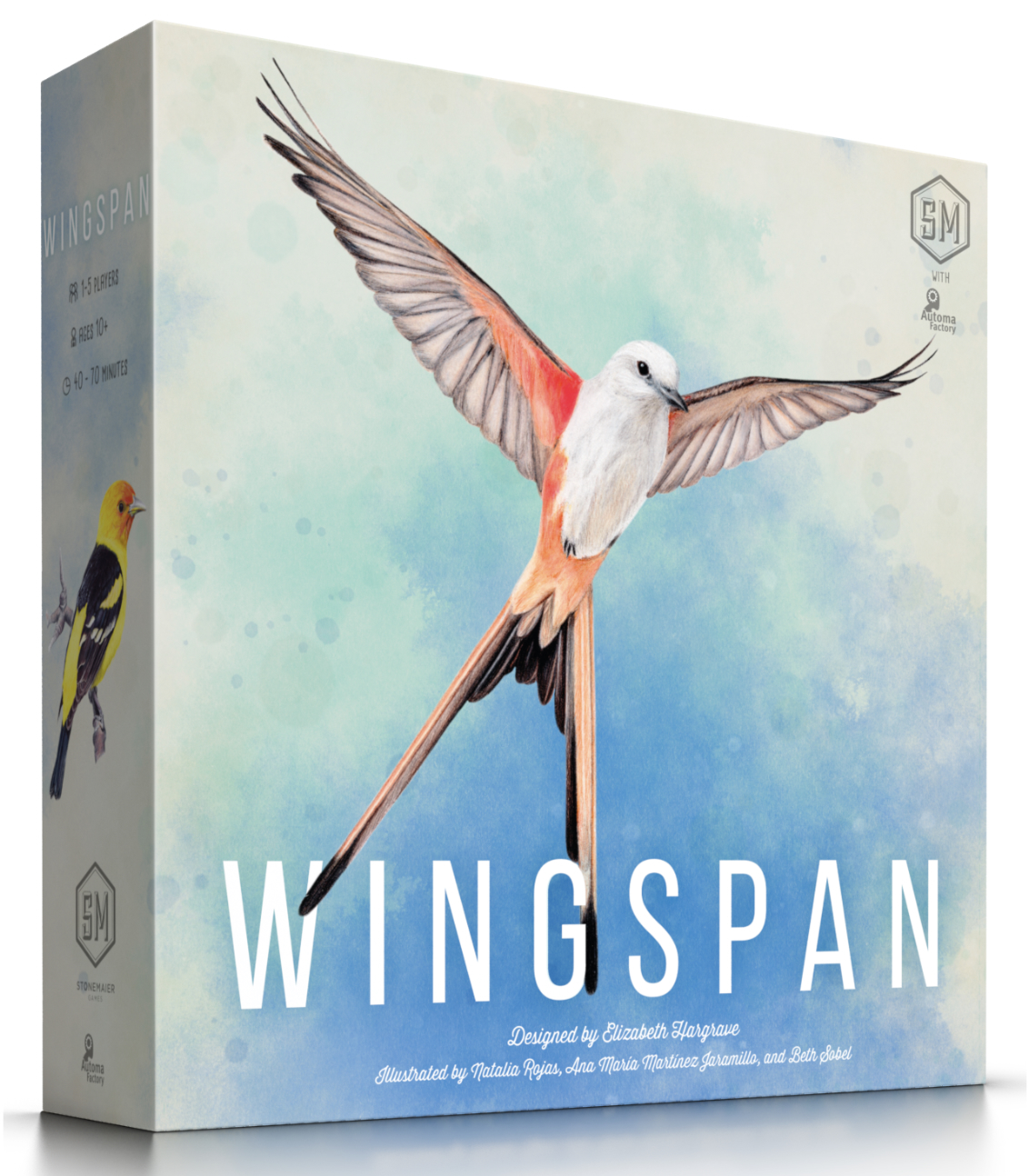
Cover of game box. Blue sky and red and white bird with wings expanded. The word Wingspan is across the box.

“Wingspan” is an award-winning strategy board game designed by Elizabeth Hargrave and published by Stonemaier Games. Released in 2019, the game has gained widespread acclaim for its unique theme, elegant mechanics, and captivating gameplay. In “Wingspan,” players assume the roles of bird enthusiasts, competing to attract and care for a variety of bird species in their avian habitats.

Game Components:

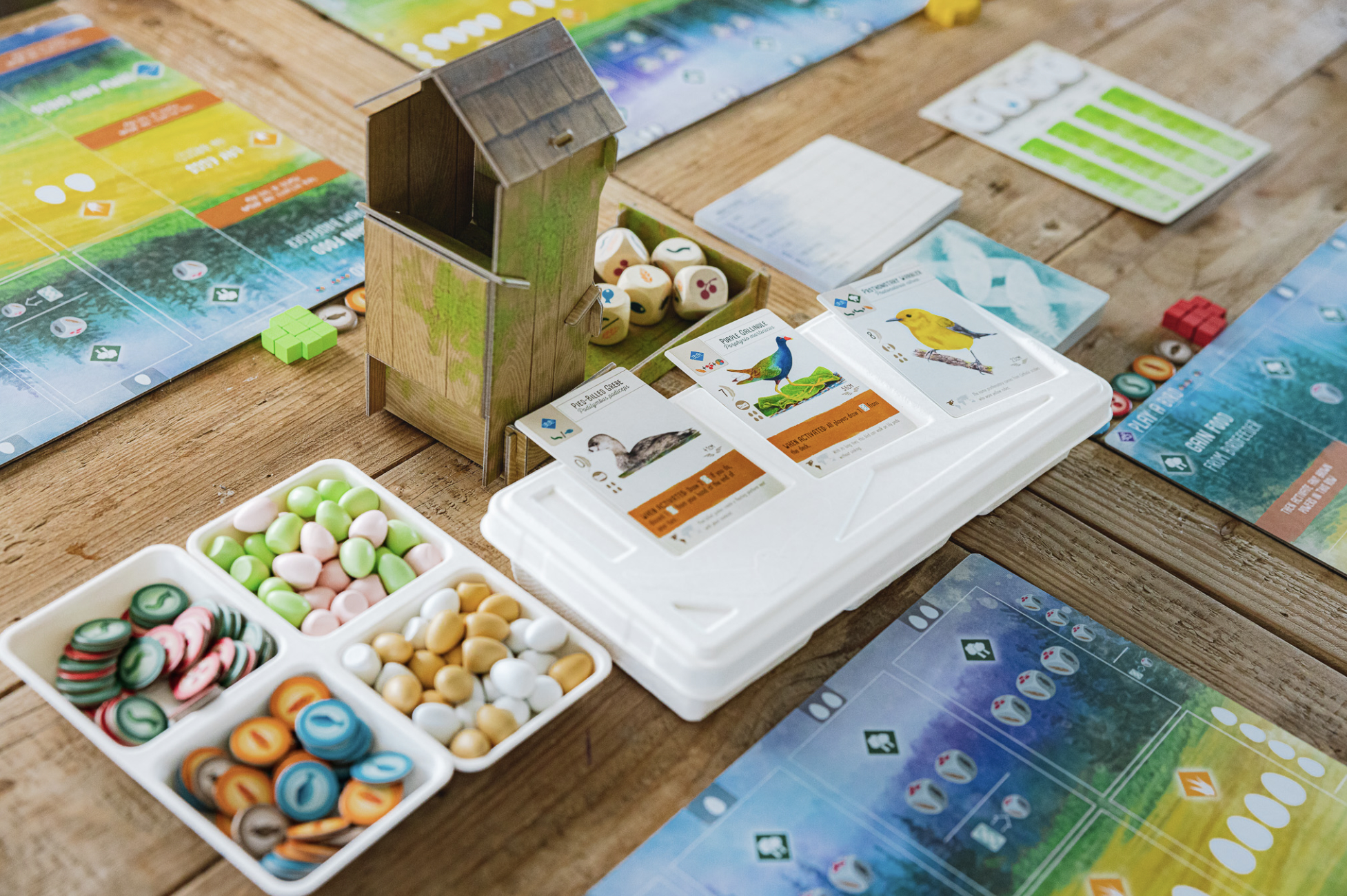
The game comes with a visually stunning assortment of components, including bird cards featuring beautifully illustrated species, player mats representing different habitats, wooden dice, food tokens, eggs, and action cubes. The artwork and attention to detail in the game’s design contribute to its overall immersive experience.

Gameplay:

“Wingspan” focuses on resource management, engine-building, and strategic card play. Each player begins the game with a player mat representing a specific habitat (grassland, forest, or wetland) and a set of initial bird cards. The goal is to build a diverse and efficient ecosystem by attracting birds with varying abilities and attributes.

Attracting Birds:

Players take turns performing actions such as drawing bird cards, playing birds to their habitats, gaining food, laying eggs, and activating bird abilities. Bird cards are placed on the player mat to create a tableau, with each bird contributing to the player’s unique engine. Birds have distinct abilities that interact with other cards and resources, allowing players to create synergistic combinations for points and benefits.

Eggs and Food:

Eggs serve as a form of currency, used for various actions and scoring at the end of the game. Players must manage their egg supply carefully. Additionally, food tokens are collected to activate birds’ abilities and to help birds reproduce.

End-of-Round and Scoring:

The game is played over four rounds, each representing a season. At the end of each round, players score points based on the number of eggs laid, birds with specific abilities, and achievements completed. The player with the most points at the end of the fourth round wins.

Variety and Replayability:

One of the game’s strengths is its vast array of bird species, each with unique abilities, art, and flavor text that provides interesting facts about the birds. With different bird cards, abilities, and strategies to explore, “Wingspan” offers high replayability as players experiment with various combinations and approaches.

Expansion and Community:

“Wingspan” has also been expanded with additional content, including expansions that introduce new bird species, player mats, and mechanics, enhancing the game’s depth and complexity. The game has garnered a strong and passionate community of players, with online resources, tournaments, and discussion groups dedicated to sharing strategies and experiences.

The Bottom Line:

“Wingspan” is celebrated for its harmonious blend of engaging gameplay, educational value, and thematic beauty. With its emphasis on strategic decision-making, elegant mechanics, and the joy of birdwatching, the game offers a uniquely immersive experience that appeals to both avid gamers and casual players. “Wingspan” has undoubtedly taken flight as a modern classic in the world of board gaming.

Photos courtesy of Stonemaier Games

Buy on Amazon

Continue reading

Chaosium – Rick Meints

Chaosium – Rick Meints

The Chaosium was founded by visionary game designer Greg Stafford in 1975. For more than forty years, Chaosium has captivated gamers, readers and mythic adventurers worldwide.

Rick is the President of Chaosium. His career in the gaming industry started in the mid 90’s when he moved to the UK and helped with the layout for Tales of the Reaching Moon magazine. His Gloranthan and RuneQuest roots stem back to the late 70s. An avid RPG collector, his love of all of Chaosium’s publications, plus anything Gloranthan or RuneQuest in nature has earned him the nickname “Mr. Suitcase” (or “Monsieur Valise”, as he is known on the Continent). His Meints Index to Glorantha is the comprehensive product guide to all Gloranthan publications, games, conventions, and miniatures produced from 1975 to 1997. In 1999, Rick founded Moon Design Publications, with the launch of the Gloranthan Classics line of reprints of classic RQ2 material.

Born in Kalamazoo, Michigan, Rick spent 25 years as a corporate trainer in the automotive industry before becoming a full time Chaosium employee. He now resides in Ann Arbor, Michigan, a university town often dubbed the “San Francisco of the midwest”.

Rick is a member of Chaosium’s Board of Directors, and a co-owner of the company.

www.chaosium.com

Continue reading